

As a supplier of Dredging Rubber Hoses, I've encountered numerous inquiries regarding the hoses' resistance to ozone. Ozone, a highly reactive form of oxygen, can significantly impact the durability and performance of rubber products. In this blog, I'll delve into the science behind ozone resistance in dredging rubber hoses, exploring the factors that influence it and the measures we take to ensure our hoses can withstand ozone exposure.
Understanding Ozone and Its Effects on Rubber
Ozone is a molecule composed of three oxygen atoms (O₃), which is formed naturally in the Earth's atmosphere through the action of sunlight on oxygen molecules. It can also be produced artificially in industrial settings, such as in welding operations or near electrical equipment. Ozone is a powerful oxidizing agent, meaning it has a strong tendency to react with other substances and break down their chemical bonds.
When rubber comes into contact with ozone, it can undergo a process called ozone cracking. This occurs when the ozone molecules react with the double bonds in the rubber's polymer chains, causing them to break and form small cracks on the surface of the rubber. Over time, these cracks can grow and deepen, eventually leading to the failure of the rubber product.
The rate at which ozone cracking occurs depends on several factors, including the concentration of ozone in the environment, the temperature, the exposure time, and the type of rubber used. Higher ozone concentrations, elevated temperatures, and longer exposure times generally lead to more rapid cracking.
Factors Affecting Ozone Resistance in Dredging Rubber Hoses
Rubber Compounding
The type of rubber used in the manufacturing of dredging rubber hoses plays a crucial role in determining their ozone resistance. Different types of rubber have different chemical structures and properties, which affect their susceptibility to ozone cracking.
Natural rubber (NR), for example, is highly susceptible to ozone attack due to the presence of double bonds in its polymer chains. On the other hand, synthetic rubbers such as neoprene (CR), ethylene propylene diene monomer (EPDM), and nitrile butadiene rubber (NBR) have better ozone resistance. These rubbers can be formulated with additives and antioxidants to further enhance their resistance to ozone.
Additives and Antioxidants
Additives and antioxidants are commonly used in rubber compounding to improve the ozone resistance of dredging rubber hoses. These substances work by either reacting with the ozone molecules before they can react with the rubber or by preventing the propagation of cracks once they have formed.
One of the most commonly used antioxidants is para - phenylenediamine (PPD). PPD can react with ozone to form a protective layer on the surface of the rubber, which helps to prevent further ozone attack. Other additives, such as waxes, can also be used to provide a physical barrier between the rubber and the ozone.
Hose Design and Construction
The design and construction of dredging rubber hoses can also affect their ozone resistance. Hoses with a thicker outer layer are generally more resistant to ozone cracking because the outer layer provides an additional barrier against ozone penetration. Additionally, hoses with a smooth outer surface are less likely to trap ozone and other contaminants, which can reduce the risk of ozone cracking.

Our Approach to Ensuring Ozone Resistance in Dredging Rubber Hoses
As a supplier of Dredging Rubber Hoses, we take several steps to ensure that our hoses have excellent ozone resistance.
High - Quality Rubber Selection
We carefully select the rubber materials used in our hoses based on their ozone resistance properties. For applications where ozone exposure is a concern, we often use synthetic rubbers such as EPDM or CR, which have inherently better ozone resistance than natural rubber.
Advanced Compounding Techniques
Our rubber compounding process incorporates the use of high - quality additives and antioxidants. We work closely with our chemical suppliers to develop custom - formulated rubber compounds that provide optimal ozone resistance for our dredging rubber hoses. These compounds are carefully tested to ensure they meet our strict quality standards.
Rigorous Testing
Before our hoses are released to the market, they undergo rigorous testing to evaluate their ozone resistance. We use industry - standard test methods, such as the ASTM D1149 test, which involves exposing the rubber samples to a controlled ozone environment for a specified period of time and then examining them for signs of cracking. Only hoses that pass these tests are approved for sale.
Our Product Range and Their Ozone Resistance
We offer a wide range of dredging rubber hoses, each designed to meet the specific needs of our customers.
- Dredging Discharge Rubber Hose: Our dredging discharge rubber hoses are made from high - quality rubber compounds that provide excellent ozone resistance. These hoses are designed to withstand the harsh conditions of dredging operations, including exposure to ozone in the environment.
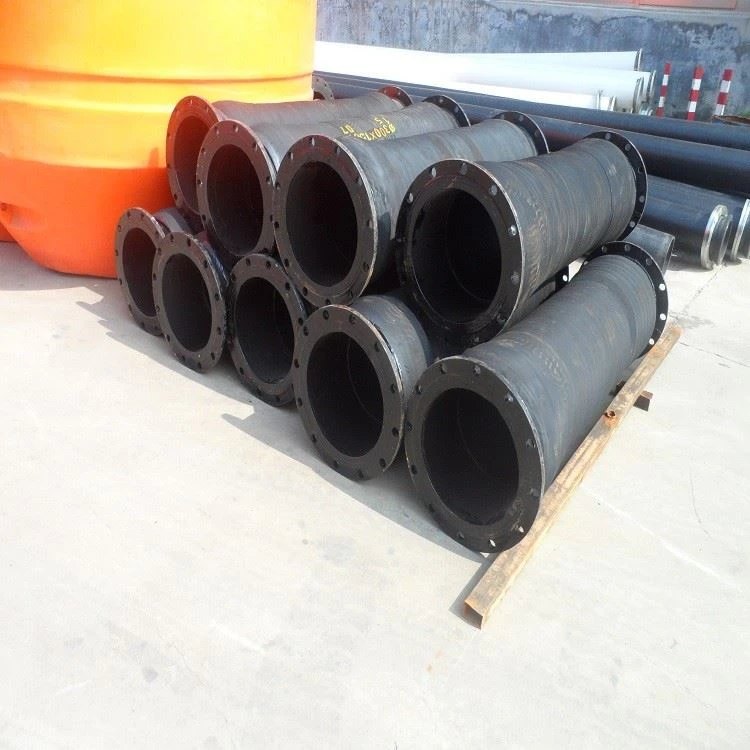
- Dredging Rubber Hose with Flange: Our hoses with flanges are also engineered to have good ozone resistance. The flanges provide a secure connection between the hoses, and the rubber material used ensures long - term durability even in ozone - rich environments.
- Dredging Rubber Hose: Our standard dredging rubber hoses are manufactured with ozone - resistant rubber to ensure reliable performance over an extended period. They are suitable for a variety of dredging applications, from small - scale projects to large - scale industrial operations.
Conclusion and Call to Action
In conclusion, dredging rubber hoses can be made resistant to ozone through careful selection of rubber materials, the use of appropriate additives and antioxidants, and proper design and construction. At our company, we are committed to providing high - quality dredging rubber hoses that offer excellent ozone resistance and long - term durability.
If you are in the market for dredging rubber hoses and have concerns about ozone exposure, we invite you to contact us for more information. Our team of experts can help you select the right hose for your specific application and provide you with detailed technical specifications and performance data. We look forward to discussing your requirements and working with you to find the best solution for your dredging needs.
References
- ASTM D1149 - Standard Test Method for Rubber Deterioration - Cracking in an Ozone - Containing Atmosphere
- "Rubber Technology: Compounding, Testing, and Processing" by Maurice Morton
- "Handbook of Elastomers" edited by James E. Mark, Burak Erman, and Charles L. Roth