

As a seasoned supplier of dredging rubber hoses, I've encountered numerous inquiries from clients regarding the applicability of our products in high - temperature dredging operations. This blog aims to delve into this topic comprehensively, providing valuable insights based on scientific knowledge and practical experience.

Understanding Dredging Rubber Hoses
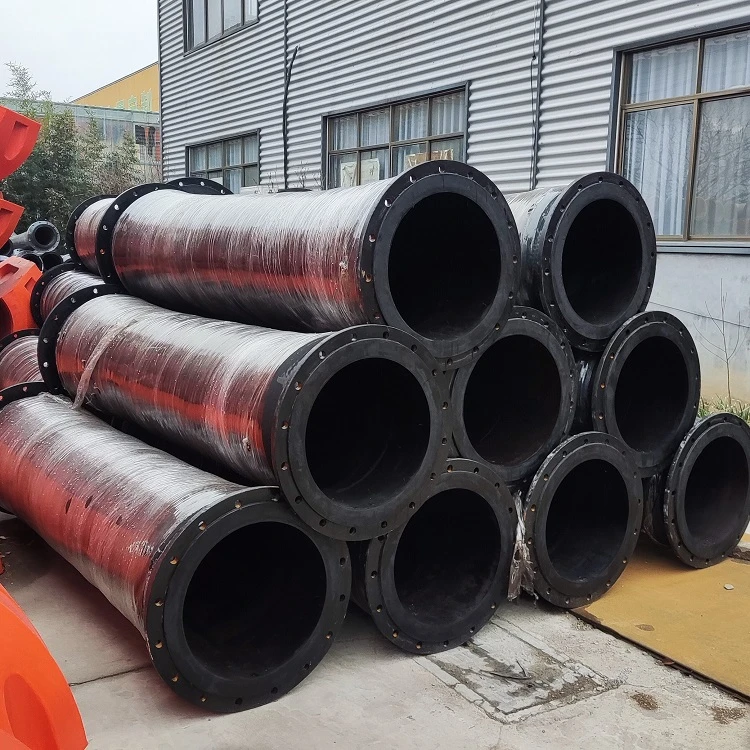
Dredging rubber hoses are essential components in dredging operations. They are designed to transport various materials such as sand, gravel, and slurry from the dredging site to the desired location. These hoses are typically made of multiple layers, including an inner tube, reinforcement layers, and an outer cover. The inner tube is in direct contact with the dredged material, and it needs to be resistant to abrasion, corrosion, and other forms of wear. The reinforcement layers provide strength and stability to the hose, preventing it from bursting under pressure. The outer cover protects the hose from external damage, such as UV radiation, ozone, and mechanical impacts.
There are different types of dredging rubber hoses available in the market, each with its own unique features and applications. For example, Differenct Size Discharge Rubber Hose comes in a variety of sizes to meet the specific requirements of different dredging projects. Flexible Dredge Rubber Hose is designed to be highly flexible, allowing for easy installation and movement in challenging environments. Dredging Rubber Hose with Flange is equipped with flanges at both ends, which makes it easier to connect to other components in the dredging system.
The Impact of High Temperature on Rubber Hoses
Rubber is a polymer material, and its properties are highly dependent on temperature. When exposed to high temperatures, rubber can undergo several changes that may affect its performance and durability.
Physical Changes
At high temperatures, rubber may become softer and more pliable. This can lead to a decrease in the hose's dimensional stability, causing it to expand or deform. In extreme cases, the hose may even lose its shape completely, resulting in leakage or blockage of the dredged material. Additionally, the softening of the rubber can reduce its resistance to abrasion, making it more prone to wear and tear.
Chemical Changes
High temperatures can also accelerate the chemical degradation of rubber. Oxidation is one of the most common chemical reactions that occur in rubber at high temperatures. Oxygen in the air reacts with the rubber molecules, breaking them down and forming new compounds. This can lead to a loss of strength and elasticity in the hose, as well as an increase in its brittleness. Other chemical reactions, such as hydrolysis and thermal decomposition, can also occur under high - temperature conditions, further deteriorating the rubber's properties.
Compatibility with Dredged Materials
In high - temperature dredging operations, the dredged materials may also have a higher temperature. Some materials, such as hot slurry or molten substances, can transfer heat to the rubber hose, exacerbating the temperature - related problems. Moreover, certain chemicals in the dredged materials may react with the rubber at high temperatures, causing corrosion or other forms of damage.
Factors Affecting the Suitability of Dredging Rubber Hoses for High - Temperature Operations
Rubber Material Selection
The choice of rubber material is crucial in determining the hose's ability to withstand high temperatures. Different types of rubber have different temperature resistance properties. For example, silicone rubber has excellent high - temperature resistance, with a continuous service temperature range of up to 200 - 250°C. Fluoroelastomers, such as Viton, can also withstand very high temperatures, up to 300°C in some cases. On the other hand, natural rubber and some synthetic rubbers, like styrene - butadiene rubber (SBR), have relatively low temperature resistance, typically up to 70 - 80°C.
Reinforcement Design
The reinforcement layers in the dredging rubber hose play an important role in maintaining its structural integrity at high temperatures. High - strength synthetic fibers, such as aramid or polyester, can be used as reinforcement materials. These fibers have high tensile strength and low thermal expansion coefficients, which can help to prevent the hose from deforming or bursting under high - temperature conditions. Additionally, the design of the reinforcement layers, such as the number of layers and the angle of the fibers, can also affect the hose's performance at high temperatures.
Hose Manufacturing Process
The manufacturing process of the dredging rubber hose can also impact its high - temperature performance. Proper vulcanization is essential to ensure the cross - linking of the rubber molecules, which improves the hose's strength, elasticity, and heat resistance. Over - vulcanization or under - vulcanization can lead to a decrease in the hose's performance and durability. Moreover, the quality control during the manufacturing process, such as the inspection of raw materials and the monitoring of production parameters, is crucial to ensure the consistency and reliability of the hoses.
Applications and Limitations of Dredging Rubber Hoses in High - Temperature Dredging Operations
Suitable Applications
In some high - temperature dredging operations, where the temperature is relatively moderate and the duration of exposure is short, dredging rubber hoses can still be used. For example, in the dredging of warm water bodies or the transportation of mildly heated slurry, hoses made of heat - resistant rubber materials can provide a cost - effective solution. These hoses can be used in various industries, such as mining, construction, and environmental remediation.
Limitations
However, in extreme high - temperature conditions, such as in the dredging of molten materials or in environments with temperatures above the rubber's maximum service temperature, the use of traditional dredging rubber hoses may not be feasible. In such cases, alternative materials, such as metal pipes or ceramic - lined hoses, may need to be considered. These materials have higher temperature resistance but may also be more expensive and less flexible than rubber hoses.
Conclusion
In conclusion, the use of dredging rubber hoses in high - temperature dredging operations depends on several factors, including the rubber material, reinforcement design, and manufacturing process. While some heat - resistant rubber hoses can be used in moderate high - temperature conditions, there are limitations to their use in extreme environments.
As a supplier of dredging rubber hoses, we are committed to providing our customers with high - quality products that meet their specific requirements. If you are considering using dredging rubber hoses in high - temperature operations, we recommend consulting with our technical experts. They can help you select the most suitable hose based on your project's temperature, pressure, and material requirements. We also offer customized solutions to ensure that our hoses can perform optimally in your specific application.
If you are interested in learning more about our dredging rubber hoses or would like to discuss your procurement needs, please feel free to contact us. We look forward to the opportunity to work with you and provide you with the best dredging solutions.
References
- "Handbook of Rubber Technology" by K. C. Frisch and L. P. Rubens
- "Rubber Compounding: Principles, Materials, and Techniques" by Maurice Morton
- Industry reports on dredging equipment and materials