

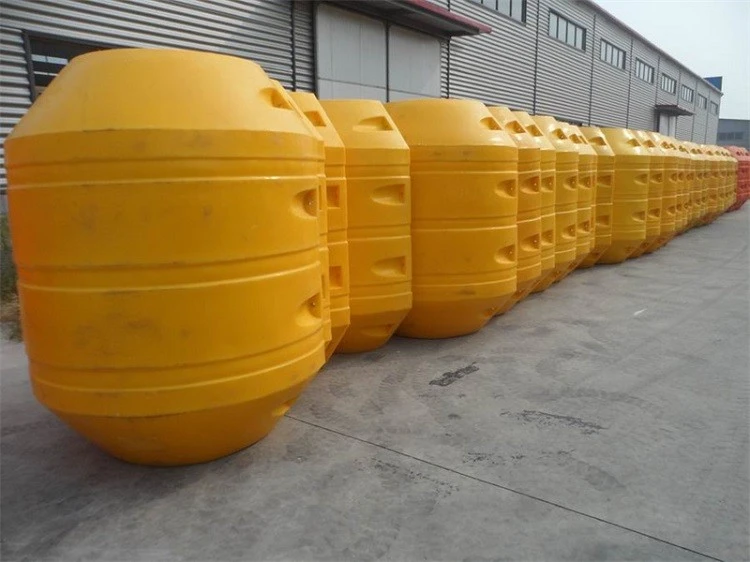
The size of a pipe float plays a crucial role in determining its performance. As a pipe float supplier, I have witnessed firsthand how different sizes can impact various aspects of a pipe float's functionality. In this blog, I will delve into the relationship between the size of a pipe float and its performance, exploring how different dimensions can affect buoyancy, stability, and overall efficiency.

Buoyancy and Size
One of the primary functions of a pipe float is to provide buoyancy to support pipes or other equipment in water. The size of a pipe float directly influences its buoyancy capacity. Larger pipe floats generally have a greater displacement volume, which means they can support more weight. This is because buoyancy is determined by the amount of water displaced by the float. According to Archimedes' principle, the buoyant force acting on an object submerged in a fluid is equal to the weight of the fluid displaced by the object. Therefore, a larger pipe float will displace more water and generate a greater buoyant force, allowing it to support heavier pipes or equipment.
For example, if you are using pipe floats to support a large - diameter pipeline in a deep - water environment, a larger pipe float will be more suitable. A Dredging Cable Float with a larger size can provide the necessary buoyancy to keep the heavy cable and associated equipment afloat. On the other hand, if you are dealing with a smaller - scale project, such as a residential drainage system, a smaller pipe float may be sufficient.
Stability and Size
The size of a pipe float also affects its stability. A larger pipe float typically has a wider base and a lower center of gravity, which makes it more stable in the water. This is important, especially in rough water conditions or when there are external forces acting on the pipes. For instance, in areas with strong currents or waves, a larger Pipe Floating Pontoon will be less likely to tip over or move erratically.
In contrast, smaller pipe floats may be more prone to instability. Their smaller size means they have a smaller base area and a higher center of gravity, making them more susceptible to being affected by external forces. However, smaller pipe floats can be more maneuverable and easier to install in tight spaces. So, the choice between a large and small pipe float depends on the specific requirements of the project, including the water conditions and the available space.
Flow Resistance and Size
Another aspect to consider is the flow resistance caused by the pipe float. The size of the float can impact the flow of water around the pipes. Larger pipe floats may create more resistance to the water flow, which can be a concern in applications where maintaining a smooth water flow is crucial. For example, in a water intake system, excessive flow resistance can reduce the efficiency of the system and increase energy consumption.
On the other hand, smaller pipe floats generally have less impact on the water flow. They can be a better choice in situations where minimizing flow resistance is important. However, it's important to note that the shape of the pipe float also plays a role in flow resistance. A well - designed float, regardless of its size, can be engineered to reduce flow resistance. For example, some HDPE Pipe Float models are designed with streamlined shapes to minimize the disruption of water flow.
Installation and Handling
The size of the pipe float also affects its installation and handling. Larger pipe floats are usually heavier and more difficult to transport and install. They may require specialized equipment, such as cranes or forklifts, to move them into place. In addition, the installation process for larger floats may be more complex, as they need to be properly aligned and secured.
Smaller pipe floats, on the other hand, are lighter and easier to handle. They can be installed by hand in many cases, which can save time and labor costs. However, when dealing with a large number of smaller pipe floats, the installation process can still be time - consuming.
Cost Considerations
Cost is an important factor when choosing the size of a pipe float. Generally, larger pipe floats are more expensive than smaller ones. This is because they require more materials and may be more complex to manufacture. However, the cost - effectiveness of a pipe float depends on the specific application. In some cases, investing in a larger pipe float may be more cost - effective in the long run, as it can provide better performance and durability.
For example, if a project requires a high level of buoyancy and stability, a larger pipe float may be a better investment. On the other hand, if the project has a limited budget and the requirements are less demanding, a smaller pipe float may be a more suitable option.
Conclusion
In conclusion, the size of a pipe float has a significant impact on its performance. Larger pipe floats generally offer greater buoyancy and stability but may cause more flow resistance and be more difficult to install and more expensive. Smaller pipe floats are more maneuverable, easier to handle, and less expensive, but they may have limitations in terms of buoyancy and stability.
As a pipe float supplier, I understand the importance of choosing the right size of pipe float for each project. We offer a wide range of pipe floats in different sizes and specifications to meet the diverse needs of our customers. Whether you need a Dredging Cable Float, a Pipe Floating Pontoon, or an HDPE Pipe Float, we can provide you with the best solution.
If you are interested in our pipe float products or have any questions about choosing the right size for your project, please feel free to contact us for a detailed consultation. We are committed to helping you find the most suitable pipe float to ensure the success of your project.
References
- Archimedes' principle: Fundamental concepts in fluid mechanics.
- Engineering textbooks on buoyancy and fluid dynamics.