

Hey there! As a supplier of Dredging Rubber Hoses, I often get asked a bunch of technical questions. One that comes up quite a bit is, "What is the coefficient of friction of a dredging rubber hose's inner wall?" It might seem like a super niche question, but it's actually pretty crucial when it comes to the performance of these hoses.
Let's start by understanding what the coefficient of friction is. In simple terms, it's a number that tells us how much resistance there is when one surface slides over another. For a dredging rubber hose, the inner - wall coefficient of friction affects how easily the dredged material, like sand, gravel, or mud, can flow through the hose.

A lower coefficient of friction means less resistance. That's a good thing because it allows the dredged material to move more freely inside the hose. When the material can flow smoothly, it reduces the energy needed to pump it, which in turn cuts down on operational costs. You won't have to use as much power to keep the stuff moving, and your pumps will thank you by lasting longer.
On the flip side, a higher coefficient of friction can cause a whole bunch of problems. The material might get stuck or move more slowly through the hose. This can lead to blockages, which are a major headache for any dredging operation. Blockages can stop the entire process, and clearing them can be time - consuming and expensive.
Now, what factors influence the coefficient of friction of a dredging rubber hose's inner wall? Well, the type of rubber used is a big one. Different rubber compounds have different surface properties. Some rubbers are smoother than others, and a smoother surface generally means a lower coefficient of friction. For example, hoses made from high - quality synthetic rubbers are often designed to have a very smooth inner surface to minimize friction.
The manufacturing process also plays a role. If the inner wall of the hose is not properly finished, it can have tiny bumps or irregularities. These little imperfections can increase the friction and make it harder for the material to flow. That's why at our company, we pay a lot of attention to the manufacturing details to ensure a smooth inner wall.
The condition of the hose matters too. Over time, the inner wall of the hose can wear down due to the constant flow of abrasive materials. As the surface gets rougher, the coefficient of friction goes up. Regular maintenance and inspection are important to catch any signs of wear early and replace the hose if necessary.
So, how do we measure the coefficient of friction? There are a few different methods. One common way is to use a device that measures the force required to pull a sample of the dredged material through a section of the hose. By comparing the pulling force to the weight of the material, we can calculate the coefficient of friction.
Now, let me tell you about some of the hoses we offer. We have a great selection of Flexible Dredge Rubber Hose. These hoses are not only flexible but also designed with a low - friction inner wall. They can adapt to different dredging environments and are easy to install and move around.
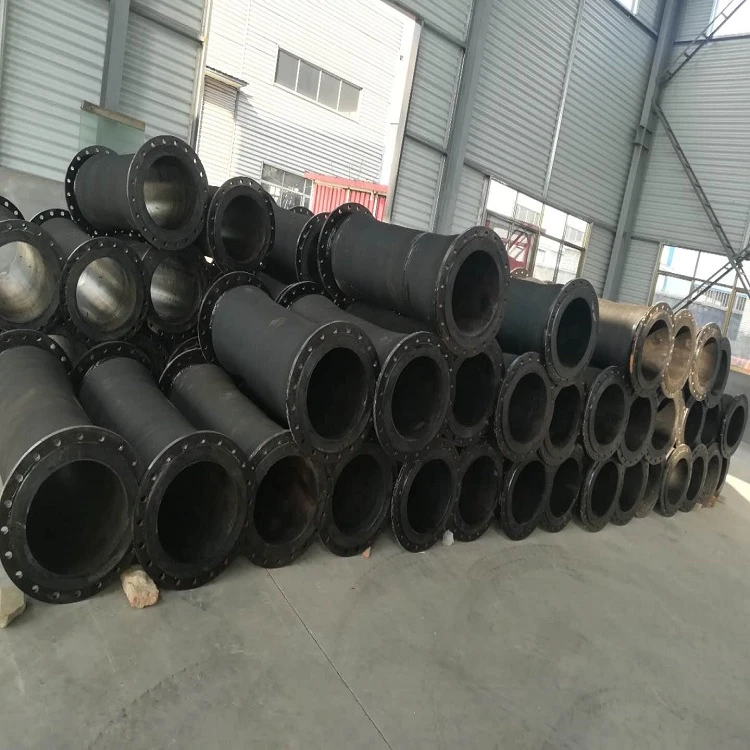
Our Dredging Rubber Hose with Flange is another popular option. The flanges make it easy to connect the hoses together securely, and the inner wall is engineered to have a smooth surface for efficient material flow.
And of course, our general Dredging Rubber Hose is a reliable choice for all kinds of dredging projects. It's built to last and can handle different types of dredged materials.
If you're in the market for dredging rubber hoses, it's important to consider the coefficient of friction. A hose with a low coefficient can save you money in the long run by reducing energy costs and minimizing the risk of blockages. But don't just take my word for it. We're happy to provide you with more information and even samples so you can test the hoses for yourself.
Whether you're working on a small - scale dredging project or a large industrial operation, we've got the right hose for you. Our team of experts is always here to answer your questions and help you find the best solution for your needs. So, if you're interested in learning more or want to start a purchase negotiation, don't hesitate to get in touch. We're looking forward to working with you and making your dredging operation more efficient.
References
- "The Basics of Friction in Industrial Hoses" - Journal of Industrial Materials Research
- "Dredging Equipment and Operations Handbook" - International Dredging Association Publications