

As a provider of Marine Marker Buoys, I've witnessed firsthand the crucial role these buoys play in marine navigation and safety. One significant factor that can influence their performance is temperature. In this blog, I'll delve into the effects of temperature on the performance of marine marker buoys, exploring how different temperature conditions can impact their functionality, durability, and overall effectiveness.
Physical Properties and Temperature
Temperature has a profound impact on the physical properties of the materials used in marine marker buoys. Most buoys are made from a variety of materials, including plastics, metals, and composites. Each of these materials responds differently to temperature changes.
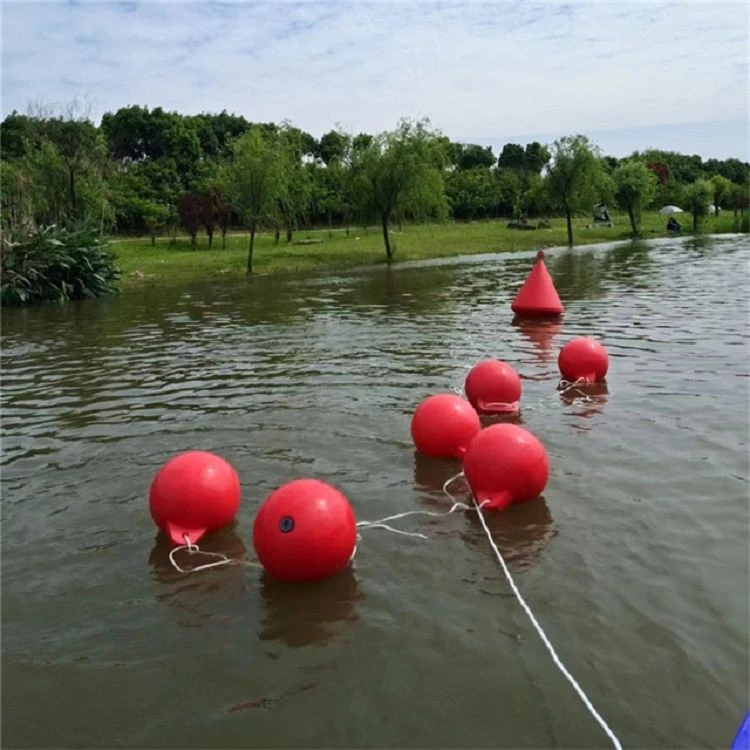
Plastic buoys, which are commonly used due to their lightweight and corrosion - resistant properties, can experience significant changes in their mechanical properties with temperature variations. At low temperatures, plastics become more brittle. The molecules in the plastic polymer have less energy, and their movement is restricted. This brittleness can make the buoy more susceptible to cracking and damage, especially if it is subjected to impacts, such as from waves or collisions with boats. For example, a Marker Buoys with Both End Eyes made of plastic may crack more easily in cold Arctic waters.
On the other hand, high temperatures can cause plastics to soften. The increased thermal energy allows the polymer chains to move more freely, reducing the material's stiffness and strength. This softening can lead to deformation of the buoy's shape. A buoy that loses its proper shape may not float correctly or may not be as visible, which can compromise its function as a navigational aid.
Metals used in marine marker buoys, such as steel or aluminum, also respond to temperature changes. Cold temperatures can increase the hardness of metals, but they can also make them more prone to fatigue and stress cracking. High temperatures, on the other hand, can cause metals to expand. If the expansion is not properly accounted for in the design of the buoy, it can lead to structural problems, such as warping or loosening of components.
Buoyancy and Temperature
Buoyancy is a fundamental property of marine marker buoys. It is determined by the difference in density between the buoy and the surrounding water. Temperature affects the density of both the buoy material and the water.
As water temperature changes, its density also changes. Cold water is denser than warm water. When a buoy is placed in cold water, it may displace less water volume to achieve the same buoyant force compared to when it is in warm water. This means that the buoy may sit higher in cold water. However, if the buoy's material also contracts at low temperatures, its volume decreases, which can counteract the effect of the denser water.
Conversely, in warm water, the water is less dense. The buoy may need to displace a larger volume of water to stay afloat. If the buoy's material expands at high temperatures, it can help increase the displaced volume and maintain buoyancy. But if the expansion is too significant, it can cause the buoy to become unstable or even sink if its weight - to - volume ratio is no longer favorable.

Visibility and Temperature
Visibility is a key function of marine marker buoys. They are often painted bright colors to be easily seen by mariners. Temperature can affect the visibility of these buoys in several ways.
Extreme cold can cause paint to crack and peel. The contraction of the buoy material at low temperatures can put stress on the paint layer, leading to the formation of cracks. Once the paint cracks, it can start to peel off, exposing the underlying material. This not only reduces the visibility of the buoy but also makes it more vulnerable to corrosion.
High temperatures can also have a negative impact on paint. Prolonged exposure to high heat can cause the paint to fade. The pigments in the paint break down under the influence of heat and sunlight, losing their vibrancy. A faded buoy is less visible, especially from a distance, which can pose a risk to navigation.
Electronic Components and Temperature
Many modern marine marker buoys are equipped with electronic components, such as lights, radar reflectors, and communication devices. Temperature can have a significant impact on the performance of these components.
At low temperatures, the chemical reactions in batteries slow down. This reduces the battery's capacity to supply power, which can cause the electronic devices on the buoy to malfunction or stop working altogether. For example, a light on an Anchor Marker Buoy may become dim or go out completely in cold weather.
High temperatures can also be detrimental to electronic components. Excessive heat can cause components to overheat, leading to premature failure. The increased thermal energy can cause the expansion of semiconductor materials, which can disrupt the electrical connections and cause short - circuits.
Maintenance and Temperature
Temperature also affects the maintenance requirements of marine marker buoys. In cold climates, buoys may need to be inspected more frequently for signs of cracking or damage due to the brittleness of the materials. The paint may need to be reapplied more often to prevent corrosion.
In hot climates, the focus of maintenance may shift to checking the integrity of the electronic components and the condition of the paint. The batteries may need to be replaced more frequently due to the reduced capacity at high temperatures.
Conclusion
Temperature has a far - reaching impact on the performance of marine marker buoys. It affects the physical properties of the materials, buoyancy, visibility, and the functionality of electronic components. As a Marine Marker Buoys supplier, we need to take these temperature - related factors into account when designing, manufacturing, and maintaining our products.
When choosing a marine marker buoy, it is essential for customers to consider the temperature conditions in the area where the buoy will be used. We offer a wide range of buoys that are designed to withstand different temperature extremes. If you are in the market for high - quality marine marker buoys, we invite you to contact us to discuss your specific needs. We can provide you with detailed information about our products and help you select the most suitable buoy for your application.
References
- ASTM International. (2019). Standard Guide for Evaluating the Performance of Marine Navigation Aids. ASTM F2075 - 19.
- ISO. (2012). ISO 17357:2012 - Maritime navigation and radiocommunication equipment and systems — Buoys and beacons — General requirements.
- Caird, J. S. (1984). Marine Navigation: A History. Naval Institute Press.