

Rebound resilience is a critical mechanical property that significantly influences the performance and durability of dredging rubber hoses. As a leading supplier of Dredging Rubber Hose, understanding and optimizing this characteristic is at the core of our product development and quality assurance processes.
Definition of Rebound Resilience
Rebound resilience refers to the ability of a material to recover its original shape and release stored energy after being deformed under stress. In the context of dredging rubber hoses, when the hose is subjected to external forces such as pressure from the flow of dredged materials, impacts from solid particles, or bending during installation and operation, it deforms. The rebound resilience determines how effectively the hose can return to its original shape once the deforming force is removed.
Mathematically, rebound resilience is expressed as the ratio of the energy returned by the material during recovery to the energy absorbed during deformation, usually presented as a percentage. A higher rebound resilience percentage indicates that the material can recover more of the energy it absorbed during deformation, meaning it is more elastic and less likely to undergo permanent deformation.
Importance of Rebound Resilience in Dredging Rubber Hoses
Resistance to Wear
Dredging operations involve the transportation of abrasive materials such as sand, gravel, and rocks. When these materials flow through the rubber hose, they exert continuous pressure and friction on the inner wall of the hose. A hose with high rebound resilience can better withstand these forces. As the abrasive particles impact the hose wall, the elastic nature of the rubber allows it to deform temporarily and then quickly recover, reducing the amount of wear and tear. This results in a longer service life for the hose, reducing the frequency of replacement and maintenance costs for dredging companies.
Pressure Resistance
Dredging hoses often operate under high pressure to ensure the efficient flow of dredged materials. The rebound resilience of the rubber plays a crucial role in maintaining the structural integrity of the hose under these pressure conditions. When the hose is pressurized, it expands slightly. A hose with good rebound resilience can recover its original diameter and shape once the pressure is released, preventing permanent expansion or bulging. This is essential for maintaining a consistent flow rate and preventing leaks or ruptures in the hose.
Flexibility and Bend Resistance
During dredging operations, hoses need to be bent and maneuvered to reach different locations. A hose with high rebound resilience is more flexible and can be bent without suffering from kinking or cracking. When the hose is bent, the rubber on the outer side of the bend is stretched, while the rubber on the inner side is compressed. The ability of the rubber to recover its shape after bending ensures that the hose can maintain its functionality and durability, even when subjected to repeated bending and straightening.
Factors Affecting the Rebound Resilience of Dredging Rubber Hoses
Rubber Compounding
The type and quality of rubber used in the hose manufacturing process have a significant impact on its rebound resilience. Natural rubber, for example, is known for its high elasticity and good rebound resilience. It has long polymer chains that can stretch and then recoil easily, making it an ideal choice for applications where high resilience is required. Synthetic rubbers such as styrene - butadiene rubber (SBR) and nitrile rubber (NBR) can also be used, and their properties can be adjusted through compounding with other additives to enhance rebound resilience.
Reinforcement Layers
Most dredging rubber hoses are reinforced with layers of fabric or steel wire to improve their strength and pressure resistance. The design and arrangement of these reinforcement layers can affect the rebound resilience of the hose. A well - designed reinforcement structure can provide support to the rubber while allowing it to deform and recover freely. For example, a hose with a spiral - wound steel wire reinforcement can distribute the stress evenly across the hose wall, enhancing its overall resilience.
Manufacturing Process
The manufacturing process of the dredging rubber hose, including vulcanization, can also influence its rebound resilience. Vulcanization is a chemical process that cross - links the rubber molecules, making the rubber more elastic and durable. The temperature, time, and pressure during the vulcanization process need to be carefully controlled to achieve the optimal level of cross - linking. If the vulcanization is over - done, the rubber may become too hard and lose its elasticity, resulting in lower rebound resilience. On the other hand, under - vulcanization can lead to a weak and less elastic hose.
Measuring and Testing Rebound Resilience
There are several standard methods for measuring the rebound resilience of rubber materials. One of the most commonly used methods is the pendulum rebound test. In this test, a pendulum is released from a fixed height to strike a rubber sample. The height to which the pendulum rebounds after hitting the sample is measured, and the rebound resilience is calculated as the ratio of the rebound height to the initial height of the pendulum, expressed as a percentage.
Another method is the compression set test. In this test, a rubber sample is compressed under a specific load for a certain period of time. After the load is removed, the sample is allowed to recover for a specified time, and the amount of permanent deformation is measured. A lower compression set value indicates higher rebound resilience, as it means the sample has recovered more of its original shape after compression.
Our Approach as a Dredging Rubber Hose Supplier
As a professional Dredging Rubber Hose supplier, we are committed to providing high - quality hoses with excellent rebound resilience. We carefully select the rubber compounds and reinforcement materials to ensure that our hoses meet the highest standards of performance and durability. Our R & D team continuously conducts research and development to improve the rebound resilience of our hoses. We use advanced manufacturing techniques and strict quality control measures to ensure that each hose we produce has consistent and reliable performance.

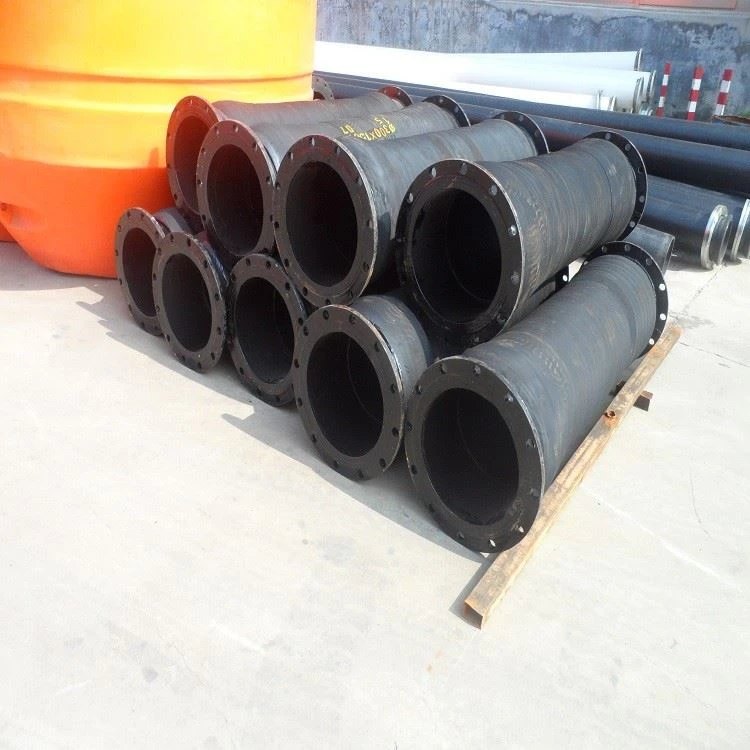
We offer a wide range of dredging rubber hoses, including Dredging Discharge Rubber Hose and Dredging Rubber Hose with Flange, which are designed to meet the diverse needs of dredging operations. Whether you are involved in small - scale dredging projects or large - scale marine dredging, we can provide you with the right hose solution.
Contact Us for Your Dredging Rubber Hose Needs
If you are looking for high - quality dredging rubber hoses with excellent rebound resilience, we invite you to contact us. Our experienced sales team is ready to assist you in selecting the most suitable hose for your specific dredging requirements. We can provide detailed product information, technical support, and competitive pricing. Don't hesitate to reach out to us to start a discussion about your dredging rubber hose needs.
References
- ASTM D1054 - 18, Standard Test Method for Rubber Property - Rebound Resilience.
- ISO 4662:2016, Rubber, vulcanized or thermoplastic - Determination of compression set.
- "Handbook of Rubber Technology" by Maurice Morton, which provides in - depth knowledge on rubber compounding and properties.