

Tensile strength is a critical property when it comes to discharge rubber hoses, especially in demanding industrial applications. As a leading supplier of discharge rubber hoses, I understand the importance of this characteristic and its impact on the performance and durability of the hoses. In this blog, we'll delve into what tensile strength means for a discharge rubber hose, why it matters, and how it relates to the overall quality of the product.
Understanding Tensile Strength
Tensile strength refers to the maximum amount of tensile (pulling) stress that a material can withstand before breaking or undergoing permanent deformation. In the context of a discharge rubber hose, it measures the hose's ability to resist being pulled apart when subjected to forces during operation. This is particularly important in applications where the hose is under tension, such as in dredging operations, where the hose may be pulled along the seabed or suspended in the water.
The tensile strength of a discharge rubber hose is typically measured in pounds per square inch (psi) or megapascals (MPa). A higher tensile strength indicates that the hose can withstand greater pulling forces without failing. This is crucial for ensuring the safety and reliability of the hose in high - stress environments.
Factors Affecting Tensile Strength
Several factors can influence the tensile strength of a discharge rubber hose:
Rubber Compound
The type of rubber used in the hose construction plays a significant role. Different rubber compounds have varying levels of strength and elasticity. For example, natural rubber is known for its high tensile strength and excellent resilience, making it a popular choice for many discharge hoses. Synthetic rubbers, such as neoprene and nitrile, also offer good tensile strength along with additional properties like oil resistance and weather resistance.
Reinforcement Layers
Most discharge rubber hoses are reinforced with layers of fabric or wire to enhance their strength. The type, number, and arrangement of these reinforcement layers can greatly affect the hose's tensile strength. For instance, hoses reinforced with high - strength polyester or steel wire can withstand much higher pulling forces compared to those with only a single layer of fabric reinforcement.
Manufacturing Process
The way the hose is manufactured also impacts its tensile strength. Proper vulcanization, which is the process of cross - linking the rubber molecules, is essential for achieving optimal strength. If the vulcanization process is not carried out correctly, the rubber may not have the desired mechanical properties, leading to a lower tensile strength.
Importance of Tensile Strength in Dredging Applications
In dredging operations, discharge rubber hoses are used to transport large volumes of sediment, sand, and water from the dredger to the disposal site. These hoses are often subjected to significant pulling forces due to the movement of the dredger, the weight of the material inside the hose, and the forces exerted by the water flow.
A hose with insufficient tensile strength may rupture or split under these forces, leading to costly downtime, environmental contamination, and safety hazards. For example, if a hose breaks during a dredging operation, it can cause the release of sediment into the surrounding water, which may harm the local ecosystem.
That's why we, as a discharge rubber hose supplier, offer hoses with high tensile strength specifically designed for dredging applications. Our Dredging Rubber Hose and Dredging Discharge Rubber Hose are engineered to withstand the harsh conditions of dredging, ensuring reliable performance and long service life.
Tensile Strength and Hose Durability
Tensile strength is closely related to the durability of the discharge rubber hose. A hose with high tensile strength is less likely to develop cracks or tears during normal use. This means that it can last longer, reducing the need for frequent replacements.
In addition, a hose that can withstand high pulling forces is better able to resist abrasion. When a hose is under tension, it is more likely to rub against other surfaces, such as the seabed or the hull of a vessel. A high - strength hose can better withstand this abrasion, further extending its service life.
Testing Tensile Strength
To ensure the quality of our discharge rubber hoses, we conduct rigorous tensile strength testing. These tests are carried out in accordance with international standards, such as ISO or ASTM. During the test, a sample of the hose is subjected to a gradually increasing pulling force until it breaks. The maximum force applied at the point of failure is recorded as the tensile strength of the hose.
By regularly testing our hoses, we can guarantee that they meet or exceed the required tensile strength specifications. This gives our customers the confidence that they are purchasing a high - quality product that will perform reliably in their applications.
Choosing the Right Discharge Rubber Hose Based on Tensile Strength
When selecting a discharge rubber hose, it's important to consider the specific requirements of your application. If your operation involves high - stress conditions, such as long - distance dredging or high - volume material transfer, you'll need a hose with a high tensile strength.
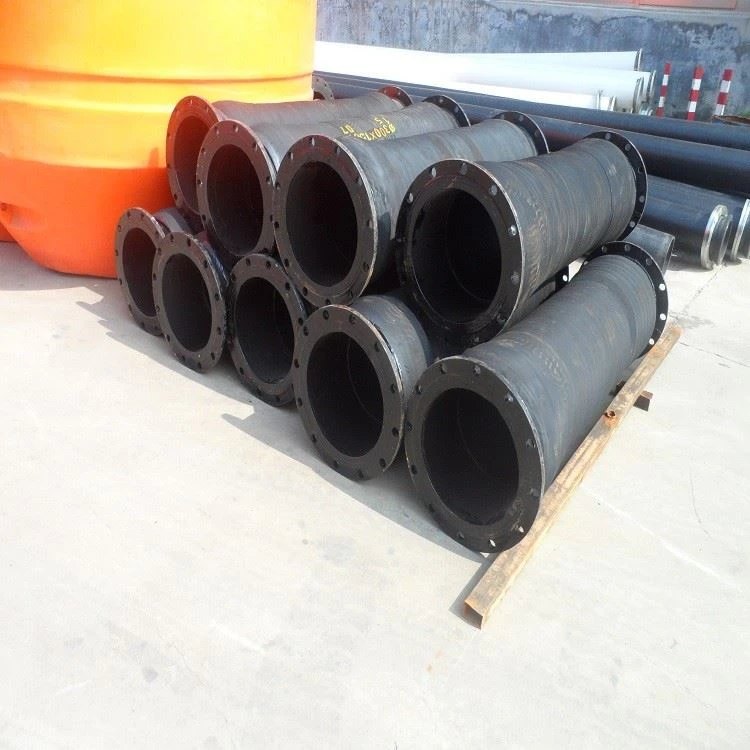
Our Dredging Rubber Hose with Flange is an excellent choice for applications where high tensile strength and easy installation are required. The flanges provide a secure connection, while the high - strength construction ensures that the hose can withstand the forces of the operation.
Conclusion
Tensile strength is a vital property for discharge rubber hoses, especially in demanding industrial applications like dredging. As a discharge rubber hose supplier, we are committed to providing our customers with hoses that offer high tensile strength, reliability, and durability.

By understanding the factors that affect tensile strength and choosing the right hose for your specific needs, you can ensure the safe and efficient operation of your equipment. If you have any questions about the tensile strength of our discharge rubber hoses or need help selecting the right product for your application, please feel free to contact us for a detailed discussion and procurement negotiation. We look forward to working with you to meet your discharge rubber hose requirements.
References
- ASTM International. (20XX). Standard test methods for rubber properties in tension.
- ISO (International Organization for Standardization). (20XX). Rubber hoses - Specification for performance.
- Smith, J. (20XX). Handbook of Rubber Technology.