

Hey there! As a supplier of rotomoulded products, I often get asked about the materials we use to make these awesome items. Rotomoulding, or rotational moulding, is a process that creates hollow plastic products by heating and rotating a mold filled with plastic resin. It's a super versatile method, and the choice of materials can greatly affect the final product's quality, durability, and functionality. So, let's dive into the materials commonly used in rotomoulding.

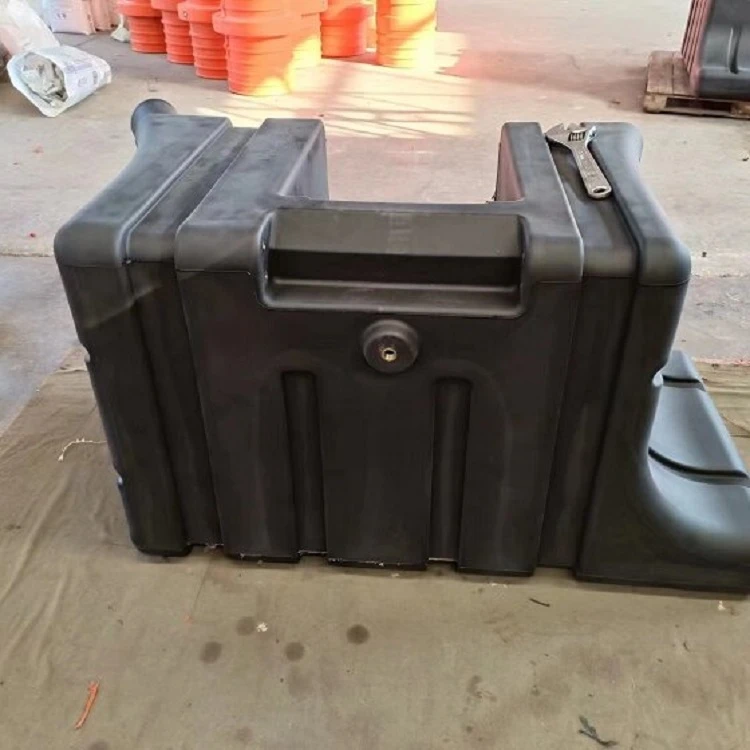
Polyethylene (PE)
Polyethylene is hands down the most widely used material in rotomoulding. There are different types of polyethylene, each with its own unique properties.
High - Density Polyethylene (HDPE)
HDPE is known for its high strength - to - density ratio. It's tough, rigid, and has excellent chemical resistance. Products made from HDPE can withstand harsh environments, making them suitable for a wide range of applications. For example, our Agricultural Chassis is made from HDPE. In the agricultural field, these chassis need to be strong enough to support heavy equipment and endure rough terrains. HDPE provides the necessary durability and can resist damage from exposure to fertilizers, pesticides, and other agricultural chemicals.
Low - Density Polyethylene (LDPE)
LDPE is more flexible and has better impact resistance compared to HDPE. It's often used when a product needs to be soft and pliable. We use LDPE to make items like some of our flexible storage containers. The flexibility of LDPE allows these containers to be easily deformed without cracking, which is great for storage in tight spaces or for products that need to adapt to different shapes during use.
Linear Low - Density Polyethylene (LLDPE)
LLDPE combines the best of both worlds. It has the strength of HDPE and the flexibility of LDPE. This makes it a popular choice for products that require a balance of these properties. Our Aquaculture Leech Container is made from LLDPE. In the aquaculture industry, these containers need to be strong enough to hold the leeches and withstand the water environment, while also being flexible enough to be easily handled and installed.
Polypropylene (PP)
Polypropylene is another common material in rotomoulding. It has a high melting point, which means products made from PP can withstand higher temperatures compared to polyethylene. PP is also very lightweight, making it ideal for applications where weight is a concern. We use polypropylene to make some of our portable equipment parts. These parts need to be light enough to be easily carried around but still strong enough to perform their functions. Additionally, PP has good chemical resistance, so it can be used in environments where it may come into contact with various chemicals.
Polyvinyl Chloride (PVC)
PVC is a versatile plastic that can be formulated to have different properties. It can be made rigid or flexible depending on the additives used. Rigid PVC is strong and has good dimensional stability. We use rigid PVC to make some of our structural components. For example, in some of our industrial enclosures, rigid PVC provides the necessary strength and protection for the equipment inside. Flexible PVC, on the other hand, is often used for products that require flexibility, such as hoses or some types of soft - sided containers.
Nylon
Nylon is a high - performance engineering plastic. It has excellent abrasion resistance, high strength, and good mechanical properties. Products made from nylon can withstand heavy wear and tear. We use nylon in applications where the product will be subject to a lot of friction or impact. For example, in some of our custom - made gears and bearings, nylon provides the durability and performance needed to ensure smooth operation.
Polycarbonate (PC)
Polycarbonate is known for its high impact resistance and optical clarity. It can be used to make products that require transparency, such as some of our viewing windows or protective shields. In our Digestion Tank, we may use polycarbonate for the inspection windows. This allows operators to visually monitor the digestion process inside the tank without having to open it, which helps maintain the integrity of the process.
Factors Affecting Material Selection
When we choose the material for a rotomoulded product, we consider several factors.
Product Functionality
The intended use of the product is the most important factor. If a product needs to be strong and rigid, we'll likely choose HDPE or polypropylene. If flexibility is required, LDPE or flexible PVC would be better options. For example, a product that needs to be transparent will require polycarbonate.
Environmental Conditions
The environment in which the product will be used also plays a crucial role. If the product will be exposed to harsh chemicals, we need to choose a material with good chemical resistance, like HDPE or PP. In outdoor applications, the material should be able to withstand UV radiation and temperature variations. Some materials can be formulated with UV stabilizers to enhance their resistance to sunlight.
Cost
Cost is always a consideration. Polyethylene is generally more cost - effective compared to some of the high - performance engineering plastics like nylon or polycarbonate. We need to balance the cost with the required properties of the product to ensure that we offer our customers the best value for money.
Conclusion
As you can see, there are a variety of materials used in rotomoulding, each with its own set of properties and advantages. At our company, we carefully select the materials based on the specific requirements of each product. Whether it's the strength of HDPE, the flexibility of LDPE, or the transparency of polycarbonate, we use the right material to create high - quality rotomoulded products.
If you're interested in our rotomoulded products or have specific requirements for a custom - made item, we'd love to hear from you. Just reach out to us, and we can start a discussion about your needs. Let's work together to find the perfect rotomoulded solution for you!
References
- "Rotational Moulding: Design, Materials, and Processing" by Paul Crawford
- "Plastics Materials" by J. A. Brydson