

Hey there! As a supplier of Dredging Cable Floats, I often get asked about how to test the buoyancy of these newly purchased floats. It's a crucial step, especially when you're relying on them to keep your dredging cables afloat and functioning properly. So, in this blog, I'm gonna share with you the steps and methods I use to test the buoyancy of a newly purchased dredging cable float.
Why Testing Buoyancy Matters
First off, let's talk about why testing buoyancy is so important. Dredging operations are often in harsh and demanding environments. The dredging cable floats need to provide enough buoyancy to support the weight of the cables and withstand the forces of water currents, waves, and other external factors. If a float doesn't have sufficient buoyancy, it can cause the cables to sink, leading to potential damage, downtime, and increased costs for repairs and replacements.
What You'll Need for the Test
Before we dive into the testing process, let's gather the necessary tools and equipment. You'll need:
- A large water tank or a suitable body of water, like a pond or a pool. Make sure it's deep enough to fully submerge the dredging cable float.
- A scale to measure the weight of the float.
- A measuring tape or ruler to measure the dimensions of the float.
- A marker or tape to mark the water level on the float.
- A stopwatch to time how long the float stays afloat.
Step 1: Measure the Float
The first step is to measure the physical dimensions of the dredging cable float. Use the measuring tape or ruler to measure the length, diameter, and any other relevant dimensions. These measurements will help you calculate the volume of the float later on.
Next, weigh the float using the scale. Record the weight in kilograms or pounds. This weight is important because it will be used to determine the buoyant force required to keep the float afloat.
Step 2: Calculate the Volume
Once you have the dimensions of the float, you can calculate its volume. The formula for calculating the volume of a cylinder (which is a common shape for dredging cable floats) is V = πr²h, where V is the volume, r is the radius (half of the diameter), and h is the height or length of the cylinder.
For example, if the float has a diameter of 30 cm and a length of 100 cm, the radius would be 15 cm (or 0.15 meters). Using the formula, the volume would be V = π(0.15)²(1) = 0.0707 cubic meters (rounded to four decimal places).
Step 3: Determine the Buoyant Force
The buoyant force is the upward force exerted by the water on the float. According to Archimedes' principle, the buoyant force is equal to the weight of the water displaced by the float. The formula for calculating the buoyant force is Fb = ρgV, where Fb is the buoyant force, ρ is the density of the water (which is approximately 1000 kg/m³ for fresh water), g is the acceleration due to gravity (approximately 9.8 m/s²), and V is the volume of the water displaced by the float.
Using the volume we calculated in the previous step (0.0707 cubic meters), the buoyant force would be Fb = (1000)(9.8)(0.0707) = 692.86 Newtons (rounded to two decimal places).
Step 4: Submerge the Float
Now it's time to submerge the dredging cable float in the water. Carefully lower the float into the water tank or body of water, making sure it's fully submerged. Use the marker or tape to mark the water level on the float.
Observe how the float behaves in the water. Does it sink immediately, or does it float? If it sinks, it means the buoyant force is not sufficient to support the weight of the float. If it floats, it means the buoyant force is greater than the weight of the float.
Step 5: Measure the Displaced Water
After the float has settled in the water, measure the volume of the displaced water. You can do this by measuring the change in the water level in the tank or by using a graduated cylinder to collect the displaced water.
The volume of the displaced water should be equal to the volume of the part of the float that is submerged in the water. Compare this volume to the volume you calculated earlier. If the volumes are close, it means the float is behaving as expected.
Step 6: Time the Float
Use the stopwatch to time how long the float stays afloat. This will give you an idea of the float's durability and its ability to maintain buoyancy over time. If the float starts to sink or shows signs of losing buoyancy after a short period of time, it may be a sign of a problem with the float.
Step 7: Check for Leaks
While the float is in the water, carefully inspect it for any signs of leaks. Look for bubbles coming from the float or any water seeping into the interior. Leaks can reduce the buoyancy of the float and cause it to sink over time.
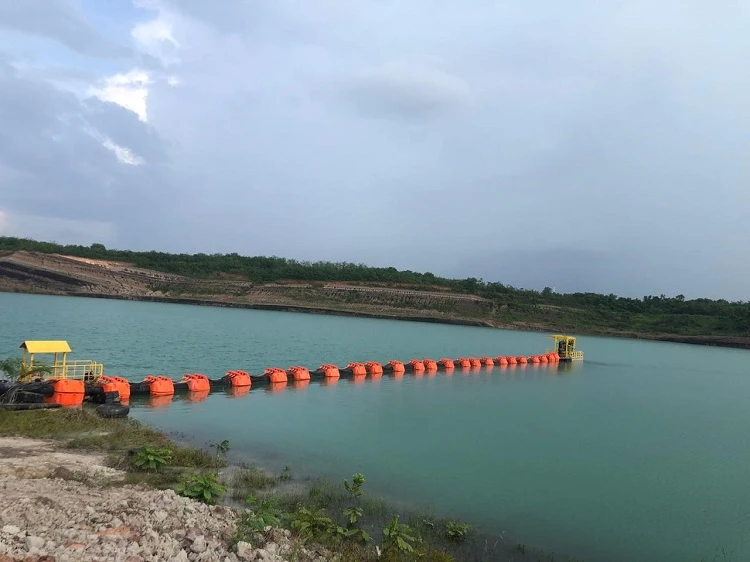

If you find any leaks, mark them with the marker or tape and note the location. You may need to repair or replace the float if the leaks are significant.
Step 8: Evaluate the Results
Once you've completed all the steps, it's time to evaluate the results of the buoyancy test. Compare the measured buoyant force to the weight of the float. If the buoyant force is greater than the weight of the float, it means the float has sufficient buoyancy to support the cables.
If the buoyant force is less than the weight of the float, it means the float may not be suitable for your dredging application. You may need to consider purchasing a different float with a higher buoyancy rating.
Conclusion
Testing the buoyancy of a newly purchased dredging cable float is an important step to ensure its performance and reliability. By following the steps outlined in this blog, you can accurately determine the buoyancy of the float and identify any potential issues before using it in your dredging operations.
If you're in the market for high-quality Dredging Cable Floats, Pipe Floaters, or Pipe Floats For Mining Tailings, feel free to reach out to us. We're here to help you find the right float for your specific needs. Contact us to start the procurement discussion and get the best solutions for your projects.
References
- Archimedes' Principle: https://en.wikipedia.org/wiki/Archimedes%27_principle
- Buoyancy: https://en.wikipedia.org/wiki/Buoyancy