

Hey there! I'm a supplier of Marine Marker Buoys, and I'm super stoked to chat with you about how these nifty little devices play a crucial role in tracking the movement of marine debris.

First off, let's get a handle on what marine debris actually is. It's basically any human - made solid material that ends up in the ocean. This can range from tiny microplastics that are almost invisible to the naked eye to large objects like discarded fishing nets and old shipping containers. Marine debris is a huge problem. It harms marine life, damages ecosystems, and even poses risks to human health and safety.
So, how do our Marine Marker Buoys fit into all this? Well, they act as beacons in the vast ocean, helping scientists, researchers, and environmentalists keep tabs on where the debris is going.
One of the key features of our buoys is their visibility. You see, these buoys are designed to stand out in the water. Whether it's through bright colors or reflective materials, they can be easily spotted from a distance, either by human observers on boats or by satellite imagery. This makes it much easier to track the general movement of debris in a particular area. For instance, if a large patch of debris is drifting in a specific direction, the buoys placed near it can give us a clear indication of the path it's taking.
Our Marker Buoys with Both End Eyes are particularly useful in this regard. These buoys are equipped with unique end - eye features that not only enhance their visibility but also allow for easy attachment to other objects. Scientists can attach these buoys to pieces of debris, and then use the buoy's movement as a proxy for the debris's movement. It's like putting a tracking device on a lost puppy in the ocean!
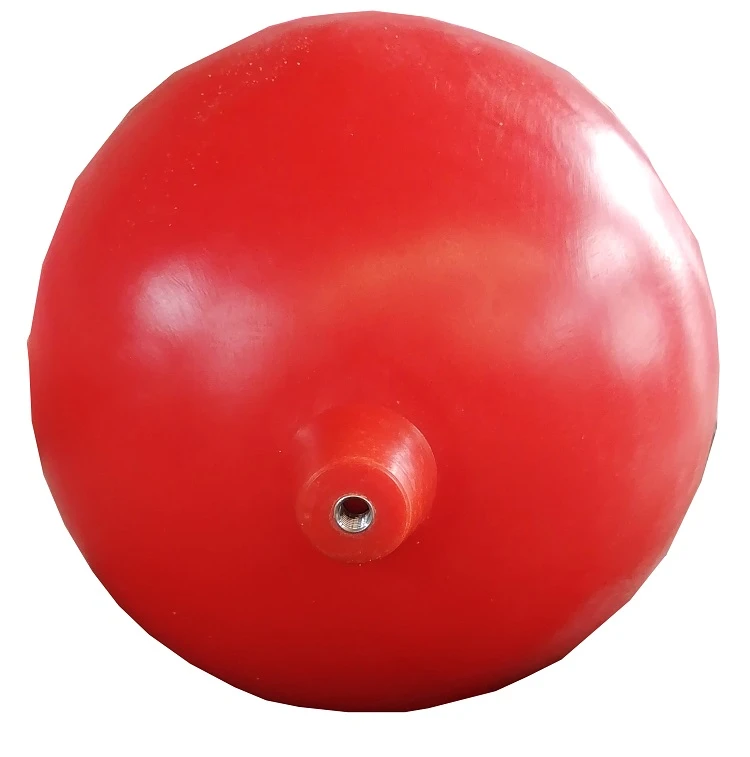
Another important aspect is the durability of our Marine Marker Buoys. The ocean is a harsh environment. There are strong waves, powerful currents, and corrosive saltwater. Our buoys are built to withstand all these challenges. They're made from high - quality materials that can resist damage from the elements. This means that once they're deployed in the water, they can continue to function effectively for a long time, providing continuous data on the movement of debris. Our PE Shell Marker Buoy is a great example. The PE (polyethylene) shell is tough and resistant to wear and tear, ensuring that the buoy stays afloat and operational.
In addition to their physical properties, our buoys can also be equipped with various sensors. These sensors can collect a wealth of data, such as the buoy's position, water temperature, and the speed and direction of the current. All this information is crucial for understanding how debris moves in the ocean. For example, by analyzing the water temperature data, we can determine if the debris is being influenced by different water masses with distinct temperature characteristics. And the current speed and direction data can help us predict where the debris might end up in the future.
The data collected by our buoys is usually transmitted back to a central monitoring station. This can be done through a variety of methods, such as satellite communication or radio signals. Once the data is received, scientists can use it to create detailed maps and models of debris movement. These maps and models are incredibly valuable for making informed decisions about debris cleanup efforts. For example, if the data shows that a large amount of debris is heading towards a popular beach, local authorities can take proactive measures to prevent it from reaching the shore.
Now, let's talk about the role of our buoys in large - scale debris tracking projects. Many international organizations and research institutions are involved in initiatives to track and clean up marine debris on a global scale. Our Marine Marker Buoys are often used in these projects because of their reliability and functionality. By deploying a network of buoys across different ocean regions, we can get a comprehensive view of how debris is moving around the world. This helps in coordinating cleanup efforts across borders and ensuring that we're making the most effective use of resources.
In some cases, our buoys can also be used to study the behavior of different types of debris. For example, plastics and metals may behave differently in the water due to their different densities and physical properties. By attaching buoys to different types of debris and tracking their movements, we can gain a better understanding of how these materials interact with the ocean environment. This knowledge can be used to develop more targeted strategies for debris prevention and cleanup.
As a supplier, we're constantly working on improving our buoys. We're investing in research and development to make them even more effective in tracking marine debris. We're exploring new materials that are more environmentally friendly and new sensor technologies that can collect even more detailed data.
If you're involved in marine research, environmental protection, or debris cleanup efforts, our Marine Marker Buoys could be a great addition to your toolkit. Whether you're a small - scale local organization or a large international agency, we have the right buoy for your needs. We offer a wide range of buoys with different features and specifications to suit various applications.
So, if you're interested in learning more about our products or want to discuss a potential purchase, don't hesitate to get in touch. We're always happy to have a chat and see how we can help you in your mission to keep our oceans clean.
References
- NOAA (National Oceanic and Atmospheric Administration). "Marine Debris: A Global Problem."
- Ocean Conservancy. "State of the Marine Debris Problem."