

Fire resistance is a critical factor in many industries, especially when it comes to products that are used in environments where there is a risk of fire. As a leading supplier of rotomoulded products, I often receive inquiries about the fire - resistance properties of our offerings. In this blog, I will delve into the details of the fire - resistance characteristics of rotomoulded products, exploring the factors that influence them and how they perform in real - world scenarios.
Understanding Rotomoulding
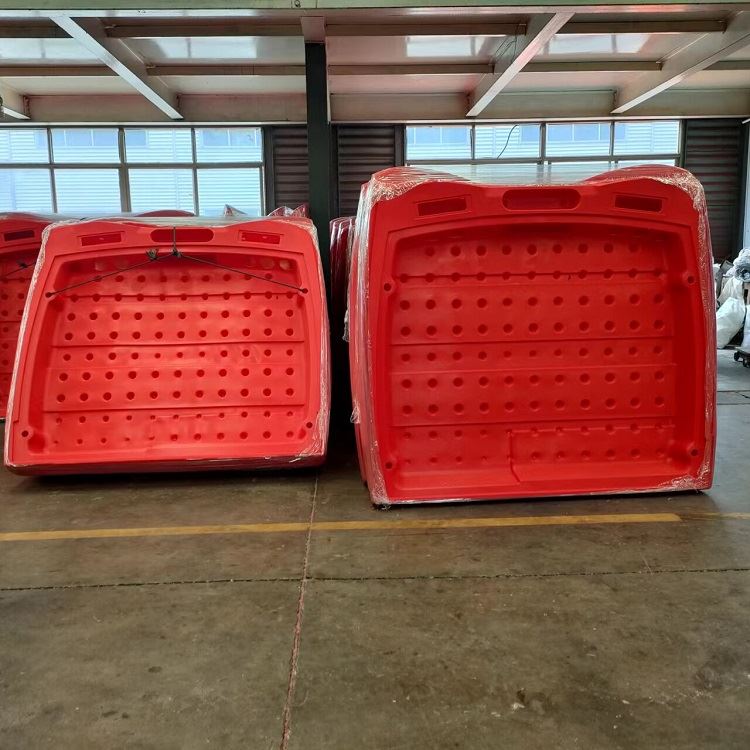
Rotomoulding, also known as rotational moulding, is a manufacturing process that involves heating a powdered plastic resin in a mold that rotates on two axes simultaneously. This rotation causes the plastic to coat the inside of the mold evenly, creating a hollow, seamless product. The process is highly versatile and can be used to produce a wide range of products, from Digestion Tank to Plastic Round Floats for Special Use and Rotational Moulding Farm Machinery Ceiling.
Factors Affecting Fire - Resistance of Rotomoulded Products
Plastic Resin Selection
The type of plastic resin used in rotomoulding plays a significant role in determining the fire - resistance of the final product. Different plastics have different chemical compositions, which affect their flammability. For example, polypropylene (PP) and polyethylene (PE) are commonly used in rotomoulding. These materials are hydrocarbon - based polymers and are generally flammable. However, they can be modified to improve their fire - resistance.
Additives can be incorporated into the resin during the manufacturing process to enhance fire - resistance. Flame retardants are chemicals that can slow down or prevent the spread of fire. There are several types of flame retardants, including halogenated and non - halogenated ones. Halogenated flame retardants, such as brominated and chlorinated compounds, have been widely used in the past due to their high effectiveness. However, concerns about their environmental impact and potential health risks have led to a growing trend towards the use of non - halogenated flame retardants, such as phosphorus - based and nitrogen - based compounds.
Wall Thickness
The wall thickness of a rotomoulded product also affects its fire - resistance. Thicker walls can provide more insulation and take longer to burn through. When a fire starts, the heat has to penetrate through the wall of the product. A thicker wall acts as a barrier, slowing down the transfer of heat to the interior of the product. This can buy time in a fire situation, allowing for evacuation or fire - fighting efforts.
Product Design
The design of the rotomoulded product can influence its fire - resistance. For example, products with a complex shape or internal structure may have different fire - behavior compared to simple, solid - walled products. Air pockets or cavities within the product can act as insulators, reducing the rate of heat transfer. Additionally, the presence of openings or vents in the product can affect the flow of oxygen, which is essential for combustion. If a product is designed to limit the supply of oxygen to the interior, it can reduce the likelihood of a fire spreading inside the product.
Fire - Resistance Testing and Standards
To ensure the safety of rotomoulded products, they are often subjected to various fire - resistance tests. These tests evaluate the flammability, flame spread, and heat release of the products. One of the most common fire - resistance tests is the UL 94 test, which is used to classify plastics according to their flammability. The UL 94 test has several ratings, including V - 0, V - 1, and V - 2, with V - 0 being the most fire - resistant.
In addition to the UL 94 test, there are other international and national standards for fire - resistance, such as the ISO 11925 - 2 standard, which measures the ignitability of building products when exposed to direct flame impingement. Compliance with these standards is crucial for rotomoulded products, especially those used in applications where fire safety is a major concern, such as in the construction, automotive, and electrical industries.
Real - World Applications and Fire - Resistance Performance
Construction Industry
In the construction industry, rotomoulded products are used for various applications, such as water tanks, storage containers, and building components. Fire - resistant rotomoulded products can be used in areas where there is a risk of fire, such as near electrical panels or in commercial kitchens. For example, a fire - resistant Digestion Tank can be installed in a building without posing a significant fire hazard.
Automotive Industry
Rotomoulded products are also used in the automotive industry, for components such as fuel tanks, air ducts, and interior parts. Fire - resistance is a critical requirement in this industry, as a fire in a vehicle can have serious consequences. By using fire - resistant rotomoulded products, the risk of a fire spreading in the vehicle can be reduced, improving the safety of the passengers.
Electrical Industry
In the electrical industry, rotomoulded products are used for enclosures, cable management systems, and other electrical components. These products need to be fire - resistant to prevent the spread of fire in case of an electrical short - circuit or overheating. A fire - resistant Rotational Moulding Farm Machinery Ceiling used in an electrical control panel can protect the sensitive electrical equipment inside and prevent the fire from spreading to other parts of the facility.
Advantages of Fire - Resistant Rotomoulded Products
Safety
The most obvious advantage of fire - resistant rotomoulded products is the enhanced safety they provide. In a fire situation, these products can slow down the spread of fire, giving people more time to evacuate and reducing the risk of injury and property damage.
Durability
Fire - resistant additives can also improve the overall durability of rotomoulded products. These additives can enhance the chemical and thermal stability of the plastic, making the product more resistant to degradation over time. This means that fire - resistant rotomoulded products can have a longer service life compared to non - fire - resistant ones.

Regulatory Compliance
Using fire - resistant rotomoulded products can help manufacturers and end - users comply with relevant fire - safety regulations. Many industries have strict fire - safety requirements, and using products that meet these standards is essential for legal and ethical reasons.
Contact for Procurement
If you are interested in our fire - resistant rotomoulded products, we invite you to contact us for further information and procurement discussions. Our team of experts can provide you with detailed product specifications, fire - resistance test reports, and pricing information. We are committed to providing high - quality, safe, and reliable rotomoulded products to meet your specific needs.
References
- ASTM International. (20XX). ASTM standards related to fire - resistance testing.
- UL. (20XX). UL 94 Standard for Tests for Flammability of Plastic Materials for Parts in Devices and Appliances.
- ISO. (20XX). ISO 11925 - 2: Reaction to fire tests - Ignitability of building products when exposed to direct flame impingement.