

Creep resistance is a crucial property when it comes to evaluating the performance and durability of flanged HDPE (High - Density Polyethylene) pipes. As a supplier of flanged HDPE pipes, understanding and communicating the concept of creep resistance is essential for our customers to make informed decisions about their piping system requirements.
What is Creep?
Creep is a time - dependent deformation that occurs under a constant load or stress. In the context of flanged HDPE pipes, when these pipes are subjected to a continuous internal or external pressure, they may gradually deform over time. This deformation can be in the form of elongation, swelling, or changes in cross - sectional shape.
The creep behavior of HDPE is influenced by several factors. Temperature is one of the most significant factors. As the temperature increases, the molecular mobility of HDPE also increases. At higher temperatures, the polymer chains can more easily slide past one another, leading to more significant creep deformation. For example, in a hot industrial environment where the flanged HDPE pipes are used to transport warm fluids, the creep rate will be higher compared to a cooler environment.
The magnitude of the applied stress also plays a vital role. Higher stresses will accelerate the creep process. If a flanged HDPE pipe is installed in a system with excessive internal pressure, the likelihood of significant creep deformation over time is much greater. The duration of the applied stress is another factor. Even a relatively low stress can cause noticeable creep if it is applied for a long enough period.
Why is Creep Resistance Important for Flanged HDPE Pipes?
Flanged HDPE pipes are widely used in various applications such as water supply, drainage, and dredging. In water supply systems, the pipes need to maintain their integrity over long periods to ensure a continuous and reliable supply of water. Creep deformation can lead to leaks, which not only waste water but also cause damage to the surrounding infrastructure.
In dredging applications, Flanged Dredging HDPE Pipe is often exposed to high - pressure slurries. If the pipes do not have good creep resistance, they may deform under the continuous pressure of the slurry, leading to reduced flow capacity and potential blockages. This can disrupt the dredging operation and increase maintenance costs.
For HDPE Pipe with Flange Both Ends, proper creep resistance is also essential for the connection between the flanges and the pipe body. Excessive creep can cause the flanges to loosen or misalign, compromising the overall structural integrity of the piping system.
How is Creep Resistance Measured?
There are several standard test methods to measure the creep resistance of HDPE materials. One common method is the constant - load creep test. In this test, a specimen of the HDPE pipe is subjected to a constant load at a specific temperature. The deformation of the specimen is then measured over time. The results are usually presented in the form of a creep curve, which shows the relationship between strain (deformation) and time.
Another method is the stress - rupture test. In this test, specimens are subjected to different levels of stress until they rupture. The time to rupture is recorded for each stress level. By analyzing the data from multiple specimens, a stress - rupture curve can be generated. This curve provides valuable information about the long - term strength and creep resistance of the HDPE material.
Factors Affecting the Creep Resistance of Flanged HDPE Pipes
- Material Quality: The quality of the HDPE resin used in the manufacturing of the pipes is a critical factor. High - quality HDPE resins with a uniform molecular structure and proper additives tend to have better creep resistance. For example, some HDPE resins are formulated with antioxidants and stabilizers that can improve the material's resistance to environmental factors and slow down the creep process.
- Manufacturing Process: The way the flanged HDPE pipes are manufactured also affects their creep resistance. Extrusion is a common manufacturing process for HDPE pipes. Proper control of the extrusion parameters such as temperature, pressure, and speed can ensure a homogeneous pipe structure, which is beneficial for creep resistance. In addition, the quality of the flange welding or attachment process can also impact the overall performance of the flanged pipe. If the flange is not properly attached, it can create stress concentrations in the pipe, leading to accelerated creep.
- Pipe Design: The design of the flanged HDPE pipe, including its wall thickness and diameter, can influence its creep resistance. Thicker - walled pipes generally have better creep resistance because they can withstand higher stresses without significant deformation. The ratio of the pipe's diameter to its wall thickness also plays a role. A lower diameter - to - wall - thickness ratio can result in better structural stability and reduced creep.
Applications and Creep Resistance Requirements
- Water Supply Systems: In water supply systems, flanged HDPE pipes are often buried underground. They need to withstand the external pressure from the soil as well as the internal pressure of the water. The creep resistance requirements for these pipes are relatively high to ensure a long service life without leaks or failures. Our Black Dredging Flanged HDPE Pipe can be a suitable choice for such applications, as it is designed to have good mechanical properties and creep resistance.
- Dredging Applications: As mentioned earlier, dredging pipes are exposed to high - pressure slurries. The pipes need to maintain their shape and integrity under these harsh conditions. Pipes with excellent creep resistance are essential to prevent blockages and ensure the efficient operation of the dredging system.
- Industrial Applications: In industrial settings, flanged HDPE pipes may be used to transport various chemicals and fluids at different temperatures and pressures. The creep resistance requirements depend on the specific application. For example, in a chemical plant where the pipes are exposed to corrosive chemicals, the pipes need to have good chemical resistance in addition to high creep resistance.
Ensuring High Creep Resistance in Our Flanged HDPE Pipes
As a supplier of flanged HDPE pipes, we take several measures to ensure that our pipes have high creep resistance. We source high - quality HDPE resins from reliable suppliers. These resins are carefully selected based on their molecular structure, density, and other properties that are related to creep resistance.
Our manufacturing process is strictly controlled. We use advanced extrusion equipment and follow strict quality control procedures to ensure that the pipes have a uniform structure and proper wall thickness. The flange attachment process is also carefully monitored to ensure a strong and reliable connection.
We also conduct extensive testing on our pipes. In addition to the standard creep and stress - rupture tests, we perform other tests such as pressure testing and impact testing to ensure the overall quality and performance of the pipes.
Conclusion
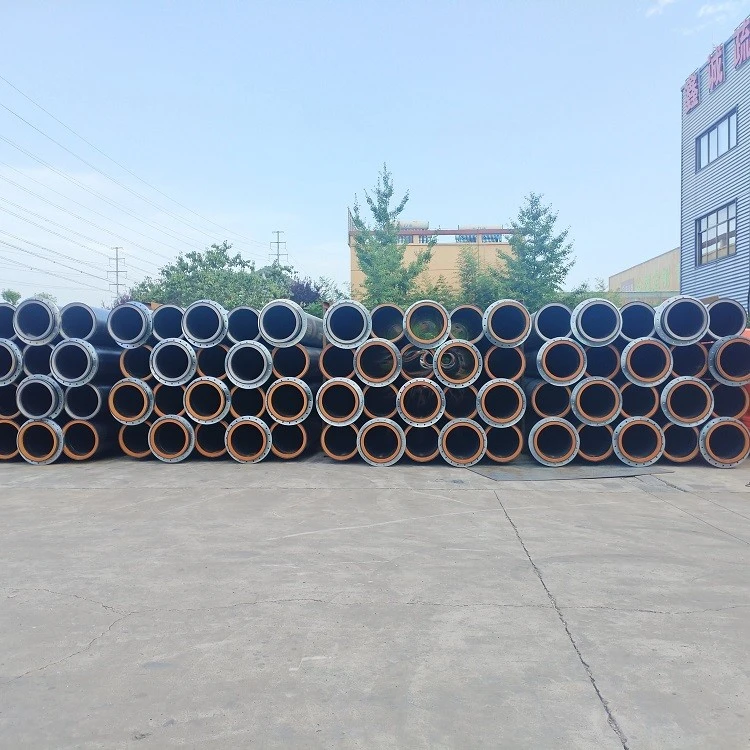
Creep resistance is a fundamental property of flanged HDPE pipes that directly affects their performance and service life in various applications. As a supplier, we are committed to providing high - quality flanged HDPE pipes with excellent creep resistance. Our Flanged Dredging HDPE Pipe, Black Dredging Flanged HDPE Pipe, and HDPE Pipe with Flange Both Ends are designed and manufactured to meet the demanding requirements of different industries.
If you are in need of flanged HDPE pipes for your project, we invite you to contact us for more information and to discuss your specific requirements. Our team of experts is ready to assist you in selecting the most suitable pipes for your application.

References
- ASTM D2990 - Standard Test Methods for Tensile, Compressive, and Flexural Creep and Creep - Rupture of Plastics.
- ISO 9080 - Plastics pipes and fittings - Determination of the long - term hydrostatic strength of thermoplastics materials in pipe form by extrapolation.
- "Handbook of Polyethylene" by Andrew Peacock, which provides in - depth information on the properties and applications of polyethylene materials, including HDPE.