

Hey there! As a supplier of marker buoys, I've seen firsthand how various factors can impact these essential marine tools. One question that often pops up is: What is the effect of water temperature on marker buoys? Well, let's dive right in and explore this topic.
Material Expansion and Contraction
First off, water temperature can cause the materials of marker buoys to expand or contract. Most of the marker buoys we supply, like the PE Shell Marker Buoy, are made of high - density polyethylene (HDPE). HDPE is a thermoplastic polymer, which means its physical properties change with temperature.
When the water gets warmer, the HDPE in the buoy expands. This expansion can be quite significant, especially in large - scale buoys. For instance, if a buoy is designed to have a specific volume and shape for optimal buoyancy and visibility, the expansion due to warm water can alter these characteristics. The buoy might become slightly larger in size, which could potentially affect its stability in the water. It might also cause some stress on the seams or joints of the buoy, increasing the risk of leaks or damage over time.
On the flip side, when the water temperature drops, the HDPE contracts. This contraction can make the buoy more brittle. Cold temperatures can reduce the flexibility of the material, making it more prone to cracking if it's hit by waves, boats, or other objects in the water. A cracked buoy is not only less effective in marking the intended area but also poses a risk of sinking, which can be a real headache for boaters and maritime authorities.
Buoyancy Changes
Water temperature also has a direct impact on the buoyancy of marker buoys. Buoyancy is determined by the density of the water and the volume of the displaced water. As the water temperature changes, its density changes too.
Warmer water is less dense than colder water. When a marker buoy is placed in warm water, it displaces a certain volume of this less - dense water. According to Archimedes' principle, the buoyant force acting on the buoy is equal to the weight of the displaced water. Since warm water is less dense, the weight of the displaced water is less, which means the buoyant force is also slightly reduced. This can cause the buoy to sit a bit lower in the water than it would in colder water.
Conversely, in cold water, the higher density of the water results in a greater buoyant force. The buoy will float higher in cold water compared to warm water. These changes in buoyancy can affect the visibility of the buoy. If a buoy is sitting too low in the water, it might be harder for boaters to spot, especially in rough seas or at night.
Impact on Visibility
Visibility is crucial for marker buoys. They need to be easily seen by boaters to ensure safe navigation. Water temperature can indirectly affect visibility through its impact on the buoy's surface and the surrounding environment.
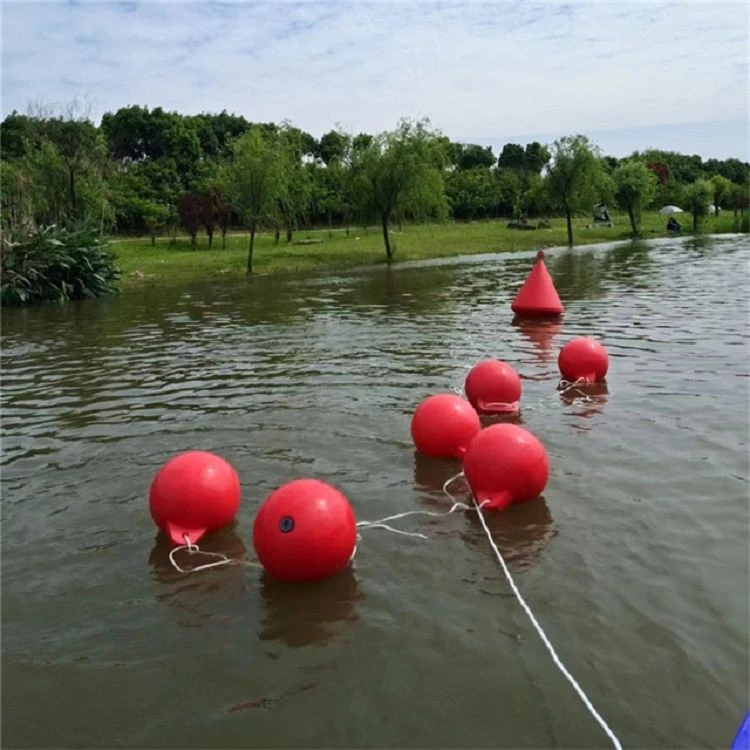

In warm water, the buoy's surface might be more prone to the growth of algae and other marine organisms. These organisms can attach themselves to the buoy, covering its bright colors and reflective surfaces. This reduces the visibility of the buoy, making it harder for boaters to identify it from a distance. Additionally, warm water can sometimes lead to the formation of a thin layer of fog or mist on the water's surface, further reducing visibility.
In cold water, ice can form on the buoy. Ice buildup can add extra weight to the buoy, affecting its buoyancy and stability. It can also cover the reflective markers and lights on the buoy, making it less visible. Moreover, ice can distort the shape of the buoy, making it look different from its normal appearance, which can be confusing for boaters.
Effects on Electrical Components
Many of our Marine Marker Buoys are equipped with electrical components such as lights and sensors. Water temperature can have a significant impact on these components.
In warm water, the electrical components can overheat. High temperatures can cause the insulation on the wires to degrade more quickly, increasing the risk of short - circuits. The batteries in the buoys can also lose their charge faster in warm conditions, reducing the operating time of the lights and sensors.
In cold water, the performance of the batteries can be severely affected. Cold temperatures can reduce the chemical reactions inside the batteries, decreasing their capacity and output voltage. This can cause the lights to dim or the sensors to malfunction. The electrical components might also become more brittle in cold temperatures, increasing the risk of damage if they are jostled by waves or other impacts.
Impact on Mooring Systems
The mooring systems of marker buoys are also affected by water temperature. The ropes, chains, and anchors that keep the buoys in place can be influenced by the changing conditions.
In warm water, the ropes and chains can expand slightly. This expansion can cause the mooring system to become looser over time. A loose mooring system means the buoy can move around more than it should, which can be a problem if it's marking a specific area such as a shipping lane or a fishing zone.
In cold water, the ropes and chains can become stiffer and more brittle. They are more likely to break if they are under stress, such as when they are pulled by strong currents or waves. The anchors might also be less effective in cold water if the seabed is frozen or covered in ice, reducing their ability to hold the buoy in place.
Conclusion
As you can see, water temperature has a wide - ranging impact on marker buoys. From material expansion and contraction to changes in buoyancy, visibility, electrical components, and mooring systems, every aspect of a buoy's performance can be affected.
At our company, we take these factors into account when designing and manufacturing our marker buoys. We use high - quality materials that can withstand a wide range of temperatures, and we test our products rigorously to ensure they perform well in different conditions. Whether you need a PE Shell Marker Buoy, Marine Marker Buoys, or Marker Buoys with Both End Eyes, we've got you covered.
If you're in the market for marker buoys and want to ensure you're getting the best products that can handle the water temperature in your area, don't hesitate to reach out. We're here to help you make the right choice and ensure your maritime operations run smoothly. Contact us today to start the procurement process and discuss your specific needs.
References
- "Marine Plastics: Properties and Applications" by John A. Brydson
- "Principles of Naval Architecture" by David C. Gilfillan
- "Marine Electrical Systems Handbook" by Nigel Calder