

Hey there! As a supplier of HDPE straight pipes, I'm super excited to take you through the production process of these amazing pipes. HDPE, or High-Density Polyethylene, is a thermoplastic polymer known for its high strength-to-density ratio, making it a top choice for a wide range of applications.
Raw Material Selection
The first step in making HDPE straight pipes is picking the right raw materials. We source high-quality HDPE resin from reliable suppliers. This resin comes in the form of small pellets, which are like the building blocks of our pipes. The quality of the resin is crucial as it directly affects the properties of the final product. For instance, the density, melt flow index, and other characteristics of the resin determine the pipe's strength, flexibility, and chemical resistance.
Mixing and Additives
Once we have the HDPE resin, we might add some additives to enhance the pipe's performance. These additives can include antioxidants to prevent the polymer from degrading over time, UV stabilizers to protect the pipe from sunlight damage, and colorants if we want to produce pipes in different colors. We use specialized mixing equipment to blend the resin and additives thoroughly. This ensures that the additives are evenly distributed throughout the resin, so every part of the pipe has the same enhanced properties.
Extrusion
The heart of the HDPE straight pipe production process is extrusion. We feed the mixed resin pellets into an extruder, which is basically a large machine with a long barrel and a screw inside. The screw rotates and pushes the pellets forward through the barrel. As the pellets move along, they are heated by heaters around the barrel. The heat melts the resin, turning it into a viscous, molten state.
At the end of the extruder, there's a die. The die is a specially designed tool that gives the molten plastic its shape. In our case, it's a circular die that forms the molten HDPE into a continuous tube. The size and shape of the die determine the outer diameter and wall thickness of the pipe. As the molten plastic is pushed through the die, it starts to cool and solidify, taking on the shape of the pipe.
Cooling
After the pipe comes out of the die, it needs to be cooled quickly to maintain its shape and properties. We use a cooling tank filled with water to do this. The newly formed pipe is submerged in the water, which rapidly cools the plastic and makes it rigid. The cooling process is carefully controlled to ensure that the pipe cools evenly. Uneven cooling can cause internal stresses in the pipe, which can lead to cracks or other defects later on.
Sizing and Calibration
Once the pipe is cooled, it goes through a sizing and calibration process. This is to make sure that the pipe has the exact dimensions specified by our customers. We use sizing sleeves and calibration equipment to adjust the outer diameter and wall thickness of the pipe. The sizing sleeves are made of a hard material and are slightly smaller than the desired outer diameter of the pipe. As the pipe passes through the sizing sleeve, it is squeezed to the correct size.
Cutting
After sizing, the continuous pipe is cut into the desired lengths. We use cutting machines, such as saws or laser cutters, to make clean, precise cuts. The length of the pipes can vary depending on the customer's requirements. Some customers might need short pipes for specific applications, while others might prefer longer pipes for large-scale projects.
Quality Control
Quality control is an essential part of the production process. We conduct a series of tests on the finished pipes to ensure they meet the required standards. These tests can include measuring the pipe's dimensions, checking its wall thickness, testing its pressure resistance, and examining its chemical composition. We also look for any surface defects, such as scratches or cracks. Only pipes that pass all the quality control tests are approved for sale.
Types of HDPE Straight Pipes
We offer a variety of HDPE straight pipes to meet different customer needs. For example, we have UV Resistance HDPE Straight Pipe. These pipes are specially formulated with UV stabilizers to withstand long-term exposure to sunlight without deteriorating. They are ideal for outdoor applications, such as irrigation systems or water supply pipes in sunny areas.
Another type is the Wear-resistant Straight HDPE Pipe. These pipes are designed to resist abrasion and wear, making them suitable for conveying abrasive materials, like sand or gravel. They are commonly used in mining, dredging, and industrial applications.
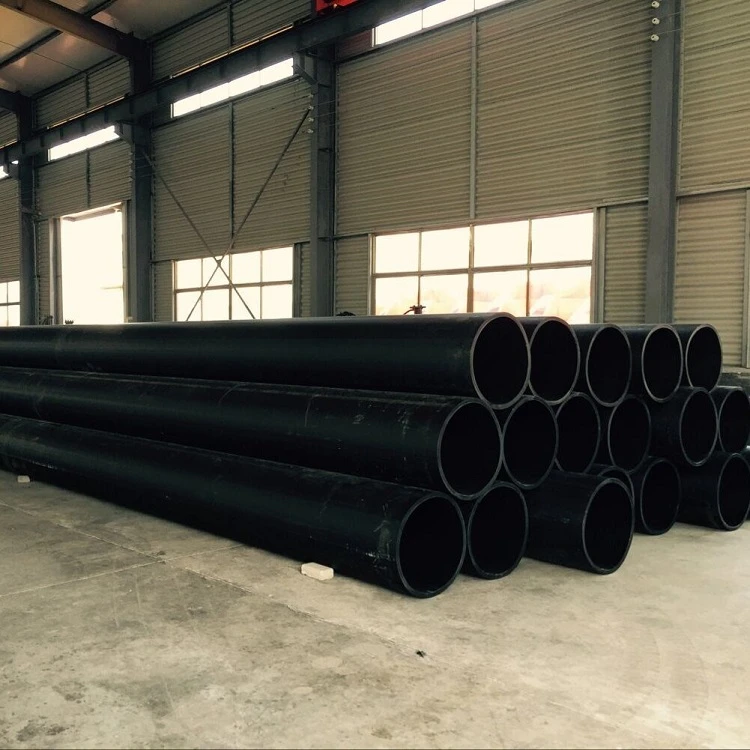
We also have Black Dredging HDPE Straight Pipe. These pipes are black in color and are specifically engineered for dredging operations. They have high strength and flexibility, allowing them to withstand the harsh conditions of dredging, such as high pressure and rough handling.

Conclusion
So, that's the production process of HDPE straight pipes in a nutshell. It's a complex but fascinating process that involves careful selection of raw materials, precise manufacturing techniques, and strict quality control. At our company, we're committed to producing high-quality HDPE straight pipes that meet the highest standards.
If you're in the market for HDPE straight pipes, whether it's for a small project or a large-scale construction, we'd love to hear from you. We can offer you a wide range of pipes with different specifications and properties to suit your specific needs. Don't hesitate to reach out to us for more information or to discuss your requirements. We're here to help you find the perfect HDPE straight pipes for your project.
References
- "Handbook of Polyethylene" by Andrew Peacock
- "Plastics Extrusion Technology" by Allan A. Griff