

As a supplier of HDPE straight pipes, I often encounter inquiries from customers regarding various aspects of our products. One question that frequently arises is whether the color of HDPE straight pipes can affect their performance. In this blog post, I'll delve into this topic, exploring the relationship between pipe color and performance based on scientific knowledge and industry experience.
The Basics of HDPE Straight Pipes
HDPE, or High - Density Polyethylene, is a thermoplastic polymer known for its high strength - to - density ratio. HDPE straight pipes are widely used in numerous applications, including water supply, drainage, gas distribution, and industrial fluid transfer. They offer excellent chemical resistance, flexibility, and long - term durability.
The manufacturing process of HDPE straight pipes involves extrusion, where the HDPE resin is melted and forced through a die to form a continuous pipe. During this process, colorants can be added to the resin to achieve different pipe colors. Common colors of HDPE straight pipes include black, blue, green, and yellow, each with its own potential significance and application scenarios.
Influence of Color on UV Resistance
One of the key performance aspects affected by the color of HDPE straight pipes is UV resistance. When HDPE pipes are exposed to sunlight, the ultraviolet (UV) radiation can cause the polymer chains in the pipe material to break down over time, leading to surface degradation, loss of mechanical properties, and reduced service life.
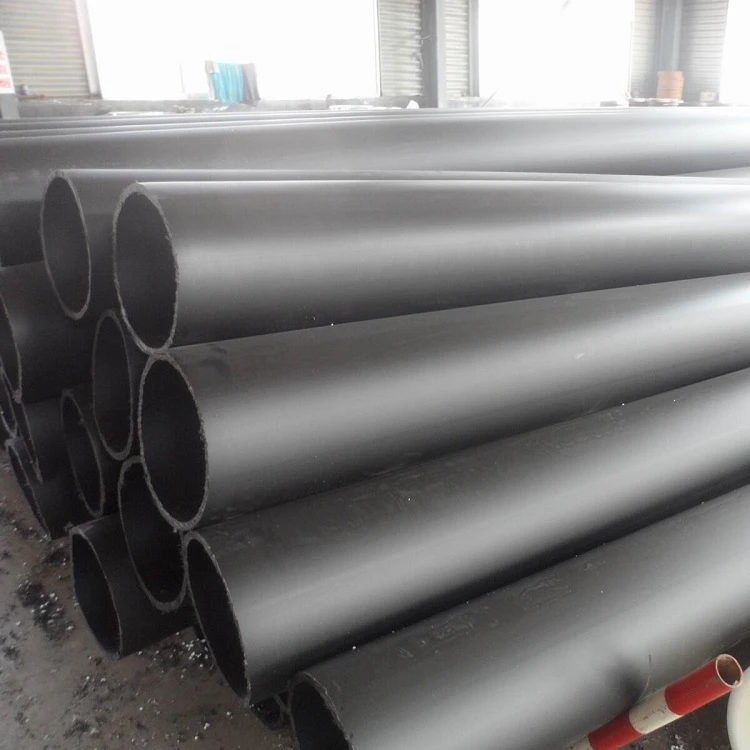
Black HDPE straight pipes are well - known for their superior UV resistance. The carbon black used as a colorant in black pipes acts as a UV stabilizer. Carbon black absorbs UV radiation and dissipates it as heat, preventing the UV rays from reaching and damaging the polymer matrix. Our UV Resistance HDPE Straight Pipe is a prime example of this. These pipes are often used in outdoor applications such as irrigation systems, where they are constantly exposed to sunlight.
On the other hand, lighter - colored pipes, such as white or light blue, generally have lower UV resistance. Without the protective effect of carbon black, the polymer in these pipes is more vulnerable to UV degradation. If lighter - colored pipes are to be used outdoors, additional UV stabilizers may need to be added during the manufacturing process, which can increase the production cost.
Impact on Chemical Resistance
The color of HDPE straight pipes usually has little direct impact on their chemical resistance. HDPE itself is highly resistant to a wide range of chemicals, including acids, alkalis, and many organic solvents. The chemical resistance of HDPE pipes mainly depends on the molecular structure of the polymer and the quality of the raw materials used.
However, some colorants may contain additives or impurities that could potentially react with certain chemicals under specific conditions. For example, if a colorant contains a metal - based compound, it might react with a strong acid or oxidizing agent. Therefore, when selecting colored HDPE pipes for chemical - related applications, it is crucial to ensure that the colorants used are chemically compatible with the transported fluids.
Relationship with Visibility and Identification
Color also plays an important role in the visibility and identification of HDPE straight pipes. Different colors are often used to distinguish pipes for different purposes. For instance, yellow HDPE pipes are commonly used for gas distribution systems to clearly indicate the presence of gas. This helps in safety management and maintenance, as workers can easily identify the type of fluid flowing through the pipes.

Blue pipes are typically used for potable water supply. The distinct color makes it easy for plumbers and maintenance crews to quickly locate and work on the water supply system. Green pipes may be used for sewerage or drainage applications. The use of specific colors for different applications enhances the efficiency of installation, operation, and maintenance of the piping systems.
Wear Resistance and Color
Wear resistance is another critical performance factor for HDPE straight pipes, especially in applications where the pipes are subject to abrasion, such as in slurry transportation. The color of the pipe does not directly determine its wear resistance. Instead, wear resistance mainly depends on the molecular weight and crystallinity of the HDPE resin.
However, in some cases, the manufacturing process associated with a particular color might influence wear resistance. For example, pipes with a homogeneous distribution of colorants may have more consistent mechanical properties, which can contribute to better wear resistance. Our Wear - resistant Straight HDPE Pipe is designed to provide excellent wear resistance regardless of the color, but it is important to note that proper material selection and processing are key to achieving this performance.
Color and Pressure Resistance
The pressure - bearing capacity of HDPE straight pipes is primarily determined by the pipe's wall thickness, diameter, and the grade of HDPE resin used. The color of the pipe has no significant direct impact on its pressure resistance. Whether a pipe is black, blue, or any other color, as long as it is manufactured to the same standards in terms of wall thickness and material grade, it will have similar pressure - withstanding capabilities.
Case Study: Black Dredging HDPE Straight Pipe
Let's take a look at a specific application: dredging. Our Black Dredging HDPE Straight Pipe is widely used in dredging projects. In dredging operations, the pipes are exposed to a harsh environment, including abrasive sediment, high - pressure water flow, and sometimes sunlight.
The black color of these pipes provides excellent UV resistance, which is essential as the pipes may be installed on the surface of the water or on the shore. At the same time, HDPE material itself offers good wear resistance against the abrasive sediment. The combination of these properties makes black dredging HDPE straight pipes a reliable choice for dredging applications.
Conclusion
In summary, the color of HDPE straight pipes can have a significant impact on certain performance aspects, particularly UV resistance and visibility/identification. While color has little direct effect on chemical resistance, pressure resistance, and wear resistance, it is important to consider the potential indirect influence of colorants and the manufacturing process associated with different colors.
When selecting HDPE straight pipes, customers should carefully evaluate their specific application requirements. For outdoor applications, black pipes are often the preferred choice due to their superior UV resistance. For applications where identification is crucial, pipes with distinct colors should be used according to industry standards.
As a professional HDPE straight pipe supplier, we offer a wide range of colored pipes to meet different customer needs. If you are interested in our products or have any questions about the performance and color selection of HDPE straight pipes, please feel free to contact us for procurement discussions. We are committed to providing high - quality products and professional technical support to ensure the success of your projects.
References
- "Handbook of Polyethylene" by Andrew Peacock.
- "Plastics Pipe Systems" by BSI Group.
- Industry standards and research reports on HDPE pipe manufacturing and application.