

How to test the sealing performance of Pipe Floaters?
As a reputable supplier of pipe floaters, I understand the critical importance of ensuring the sealing performance of these products. Pipe floaters are widely used in various industries, including mining, dredging, and marine applications, to support and protect pipes and cables floating on water surfaces. A reliable sealing performance is essential to prevent water ingress, which can lead to corrosion, damage to the internal structure, and ultimately, a reduction in the lifespan of the pipe floaters. In this blog post, I will share some effective methods for testing the sealing performance of pipe floaters.
1. Visual Inspection
The first step in testing the sealing performance of pipe floaters is a thorough visual inspection. This involves examining the surface of the floaters for any visible signs of damage, such as cracks, holes, or gaps in the sealing joints. Pay close attention to the areas where the two halves of the floater are joined together, as these are the most common areas for potential leaks. If any damage is detected, the floater should be repaired or replaced before further testing.
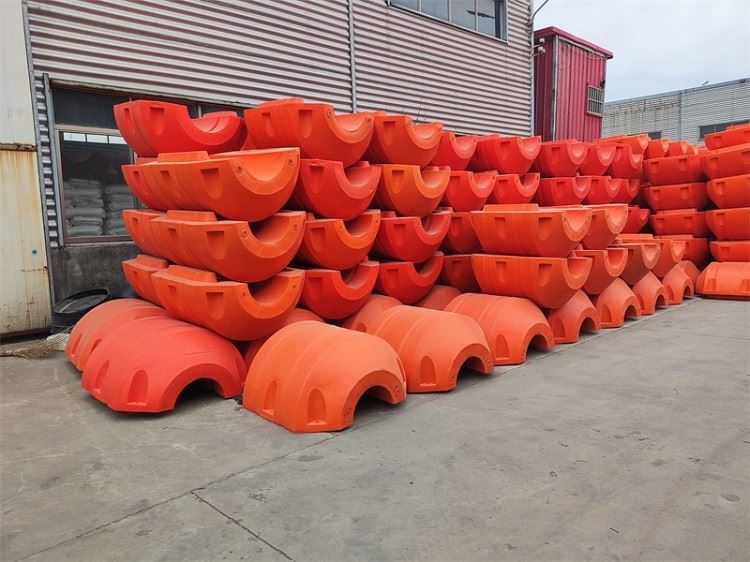

During the visual inspection, also check the quality of the materials used in the construction of the pipe floaters. High - quality materials, such as [specific material name used in your products], are more likely to provide better sealing performance. Ensure that the surface finish is smooth and free from any irregularities that could compromise the seal.
2. Water Immersion Test
The water immersion test is one of the most straightforward and effective methods for testing the sealing performance of pipe floaters. To conduct this test, follow these steps:
- Prepare the test equipment: You will need a large water tank or container that is deep enough to fully submerge the pipe floaters. The tank should be clean and free from any debris that could interfere with the test.
- Seal the ends of the pipe (if applicable): If the pipe floaters are designed to be used with a pipe, seal the ends of the pipe to prevent water from entering through the openings. This will ensure that any water ingress is due to a failure in the sealing of the floater itself.
- Submerge the pipe floaters: Carefully place the pipe floaters into the water tank and ensure that they are fully submerged. Leave them in the water for a predetermined period of time, typically [X] hours. During this time, observe the floaters closely for any signs of air bubbles escaping from the surface. Air bubbles indicate that there is a leak in the sealing, allowing air to be displaced by water.
- Check for water ingress: After the immersion period, remove the pipe floaters from the water and dry the surface. Open the floaters (if possible) and check for any signs of water inside. If there is water present, it means that the sealing performance is not satisfactory, and the floaters need to be further investigated and repaired.
The water immersion test can be adjusted according to the specific requirements of the application. For example, if the pipe floaters are intended for use in harsh marine environments, a longer immersion time or a higher water pressure can be applied to simulate real - world conditions.
3. Pressure Testing
Pressure testing is a more advanced method that can provide more accurate information about the sealing performance of pipe floaters under different pressure conditions. This test is particularly useful for applications where the pipe floaters may be subjected to external pressure, such as in deep - water or high - flow environments.
- Set up the pressure testing equipment: You will need a pressure - generating device, such as a pump, and a pressure gauge to measure the applied pressure. Connect the pressure - generating device to the pipe floaters through a suitable fitting.
- Apply pressure: Gradually increase the pressure inside the pipe floaters to the specified test pressure. The test pressure should be based on the expected operating pressure in the actual application. For example, if the pipe floaters are used in a mining tailings pipeline where the pressure can reach [X] psi, the test pressure should be at least [X + safety margin] psi.
- Monitor the pressure and check for leaks: Keep the pressure constant for a certain period of time, typically [X] minutes, and monitor the pressure gauge for any drop in pressure. A significant drop in pressure indicates a leak in the sealing. At the same time, visually inspect the floaters for any signs of deformation or leakage, such as water seepage or bulging.
Pressure testing can help identify potential weaknesses in the sealing design and materials of the pipe floaters. If a leak is detected during the pressure test, the floaters should be repaired or redesigned to improve the sealing performance.
4. Ultrasonic Testing
Ultrasonic testing is a non - destructive testing method that can be used to detect internal defects and leaks in the sealing of pipe floaters. This method is based on the principle that ultrasonic waves are reflected differently at the boundaries between different materials or when there is a void or defect in the material.
- Prepare the ultrasonic testing equipment: You will need an ultrasonic testing device, which consists of a transducer and a display unit. The transducer emits ultrasonic waves and receives the reflected waves, and the display unit shows the results.
- Conduct the test: Move the transducer along the surface of the pipe floaters, paying special attention to the sealing joints. The ultrasonic waves will penetrate the material and reflect back when they encounter a boundary or a defect. Any abnormal reflections, such as a change in amplitude or a discontinuity in the signal, may indicate a leak or a defect in the sealing.
Ultrasonic testing is a highly sensitive method that can detect even small defects that may not be visible during a visual inspection. However, it requires trained personnel to operate the equipment and interpret the results accurately.
Importance of Sealing Performance in Different Applications
The sealing performance of pipe floaters is crucial in various applications:
- Mining Tailings: In mining tailings applications, pipe floaters are used to support the pipelines that transport the waste materials. A good sealing performance is essential to prevent the leakage of toxic or harmful tailings into the environment. You can learn more about our Pipe Float For Mining Tailings, which are designed to meet the high - standard sealing requirements in this industry.
- Dredging: In dredging operations, pipe floaters are used to support the dredging cables and pipes. The harsh underwater environment, with high water pressure and abrasive materials, demands excellent sealing performance to ensure the longevity of the floaters. Our Dredging Cable Float is engineered to provide reliable sealing in these challenging conditions.
- General Pipe Support in Marine Environments: For general pipe support in marine environments, pipe floaters need to withstand the corrosive effects of saltwater. A proper seal can prevent water from entering the floaters and causing corrosion of the internal structure. Our Plastic Pipe Float offers good sealing and corrosion - resistance properties for such applications.
Conclusion
Testing the sealing performance of pipe floaters is a critical step in ensuring the quality and reliability of these products. By using a combination of visual inspection, water immersion test, pressure testing, and ultrasonic testing, you can accurately assess the sealing performance and identify any potential issues. As a supplier of pipe floaters, we are committed to providing high - quality products with excellent sealing performance. If you are in need of pipe floaters for your specific application, we invite you to contact us for further discussion and procurement. Our team of experts will be happy to assist you in selecting the most suitable products and ensuring that they meet your requirements.
References
- [Author's name], [Title of relevant research paper], [Publication name], [Year of publication]
- [Another author's name], [Another title of relevant research paper], [Another publication name], [Another year of publication]
- Industry standards and guidelines related to pipe floaters, such as [standard number and name]